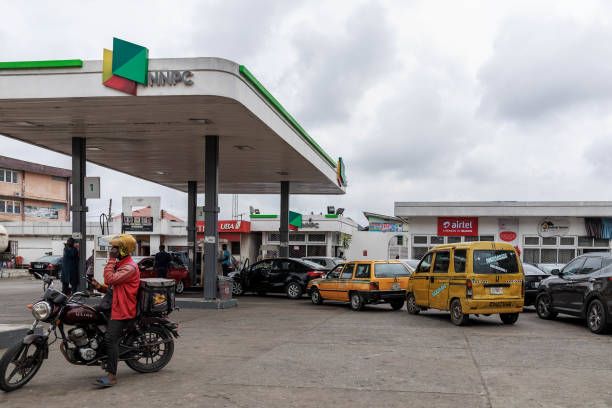

Can a 30 day petrol discount ease Nigeria’s cost of living crisis when transport fares remain market driven, access to cheaper fuel is uneven and the government has yet to explain what happens when the intervention ends?
The Federal Government’s decision to suspend the retail profit margin on petrol sold by the Nigerian National Petroleum Company Limited (NNPCL) offers temporary relief to consumers. However, its economic impact will depend on how much motorists save, whether transport operators pass on the savings and who ultimately bears the cost. Announced by the Minister of Finance and Coordinating Minister of the Economy, Taiwo Oyedele, on October 8, the measure allows NNPCL to sell petrol at cost for 30 days, with public transport operators receiving priority. The government maintains that the arrangement is not a return to the fuel subsidy regime abolished in May 2023.
Yemisi Ayediran, an economist and educator, said the policy involves NNPCL giving up its retail margin rather than introducing a nationwide reduction in petrol prices.
“NNPC is giving up its retail margin for 30 days,” she said, explaining that the reported pump price reductions of about N66 per litre represent the suspended margin rather than a substantial fall in fuel costs.
Ayediran said consumers should be able to verify the discount by comparing pump prices with NNPCL’s published landing costs. She added that the government must honour its commitment to publish the relevant figures to ensure transparency. The next challenge is ensuring that the savings reach commuters. Transport operators and unions determine fares, not the Ministry of Finance. Ayediran said the government must engage groups such as the National Union of Road Transport Workers and bus owners’ associations, agree on fare reductions and monitor compliance.
“Without that, some of the gain becomes extra profit,” she said.
The discount’s limited coverage creates another gap. Independent petroleum marketers are not automatically required to adopt NNPCL’s prices, leaving consumers dependent on local competition and the availability of participating outlets. Ayediran cited reported petrol prices ranging from N1,355 per litre in Lagos to N1,435 in Yobe, illustrating the differences consumers face across locations. Areas with few NNPCL stations could see less benefit, raising questions about the fairness and reach of the intervention.
The government is also considering a ceiling of N1,350 per litre for petrol landing costs. Under the proposed arrangement, refiners and importers would absorb costs above the ceiling and recover the difference when crude oil prices or exchange rates become more favourable. Ayediran warned that the arrangement could expose suppliers to losses if the expected improvement in market conditions does not materialise. Importers and refiners could seek government compensation or reduce supply if the arrangement makes their operations commercially unattractive.
Aliyu Ilias, an economist and development expert, questioned the structure of the discount, arguing that NNPCL’s status as a limited liability company raises questions about who ultimately bears the cost of selling petrol below its actual market price.
“We must remember that it is now NNPCL, not NNPC, which means it is now a limited liability, consequently, any reduction from the actual price must be catered for by the government, which could be seen as subsidy,” he said.
His argument raises a question about the distinction between the current intervention and the former subsidy regime. If the government must compensate NNPCL for the discount, the cost may ultimately fall on public finances, even if the arrangement is presented differently.Ilias also questioned whether the temporary reduction would provide meaningful relief.
“Reducing 60 Naira for 30 days will not be effective because of the lag time. It is also not sustainable; what happened after 30 days,” he said.
He urged the government to focus on supporting production rather than controlling the final price consumers pay. Such an approach would target the underlying costs of supplying petrol, including refining capacity, access to crude oil, foreign exchange exposure and distribution expenses.The expiry of the discount presents an immediate concern. Ayediran said the government had yet to provide a convincing explanation of what would happen after 30 days. If petrol prices rise again, transport fares, food prices and business operating costs could follow.
She urged the government to communicate its exit plan early, whether through an extension, a gradual withdrawal or another intervention. The policy’s success should be measured by its effect on the wider economy, not only by prices at NNPCL stations. Changes in independent marketers’ prices, transport fares, food and transport inflation, and the stability of petrol supply will help show whether consumers are benefiting.
Ultimately, the discount can provide short term savings, but it cannot by itself resolve the structural pressures behind high fuel costs. The government must demonstrate that the intervention reaches consumers while setting out a credible path towards more stable supply and lower production and distribution costs.