
The Nigerian Economic Summit Group has urged state governments to compete for private investment by improving governance, strengthening institutions and creating business-friendly environments instead of relying on unsustainable fiscal incentives.
The NESG made the call in its “Scale Nigeria” dialogue ahead of the 32nd Nigerian Economic Summit scheduled for October 26 and 27, 2026, at the Transcorp Hilton Hotel, Abuja.
The PUNCH reported on October 6, 2026, that the group said states seeking to attract investors must improve land administration, provide predictable regulations, strengthen dispute-resolution systems and adopt development policies that support businesses.
“State governments will be challenged to compete for investment not through unsustainable fiscal concessions but through the quality of their governance, the competence of their institutions, and the strategic intelligence of their development planning,” the NESG said.
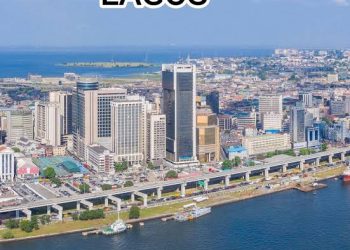
The group said Nigeria’s economic activity remained heavily concentrated in a few cities, particularly Lagos, Abuja, Kano and Port Harcourt, while large parts of the country remained economically marginalised despite their agricultural, mineral and cultural resources.
According to the NESG, the concentration of businesses and investment in a few commercial centres places excessive pressure on infrastructure in those locations while leaving infrastructure in less economically active areas underdeveloped or underutilised.
It cited traffic congestion in Lagos as an example, saying gridlock costs the economy hundreds of billions of naira annually through lost productive time.
The group argued that spreading economic activity across the country should not be viewed simply as a redistribution exercise, but as a way to expand Nigeria’s overall productive capacity by creating new markets, production zones and talent pools.
The NESG also urged states to develop strategies around their comparative advantages rather than adopting similar economic models.
It identified rice production as an opportunity for Kebbi and Niger states, high-value horticulture and cold-chain development for Plateau, tourism and cocoa for Cross River, and manufacturing and commerce for Kano.
It also identified solid minerals and timber as potential areas of strength for Ondo and Delta states.
Vanguard reported on October 5, 2026, that the NESG said unlocking these opportunities would require infrastructure, policy reforms, market linkages and access to finance.
The group also advocated regional value chains that would connect farmers and producers with processing facilities, logistics operators, domestic markets and export terminals across state boundaries.
It said government, private investors and development finance institutions would need to work together on roads, railways, warehouses, logistics facilities, electricity, water and digital infrastructure to support such value chains.
The NESG said a more geographically balanced economy would reduce pressure on established commercial centres while expanding economic opportunities across Nigeria’s states and communities.