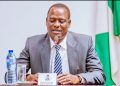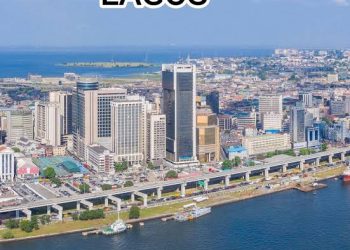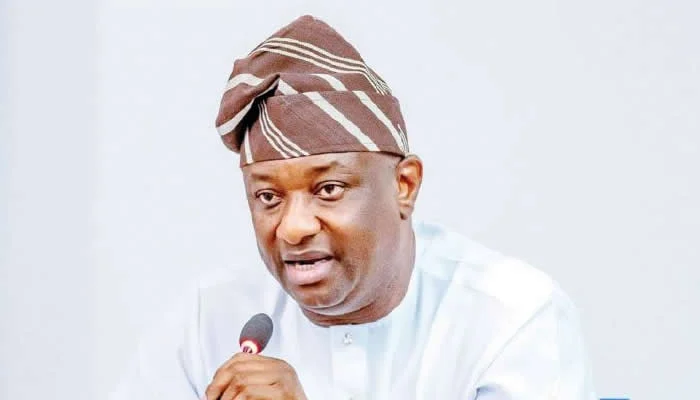

The removal of fuel and foreign exchange subsidies helped the Federal Government improve its liquidity and raise about $500 million for the reconstruction of the Murtala Muhammed International Airport, Lagos, without borrowing, Minister of Aviation and Aerospace Development Festus Keyamo has said.
Keyamo made the disclosure on Monday, October 5, 2026, at the 67th anniversary of Aero Contractors in Lagos, where he highlighted the Federal Government’s investment in aviation infrastructure.
According to The PUNCH in a report published on October 5, Keyamo said the government was able to mobilise the funds after subsidy reforms improved its financial position.
“In less than two years after we removed subsidies from both naira and fuel, President Bola Tinubu raised $500 million to rebuild Lagos Airport. Not money borrowed,” Keyamo said.
He added that the country’s liquidity had improved alongside its foreign reserves.
“Our liquidity rose. Our foreign reserves also rose from $3bn to $56bn now,” he said.
Keyamo linked the improved financial position to the government’s ability to invest in critical infrastructure without relying entirely on borrowing.
He said the Lagos airport reconstruction was part of a wider aviation infrastructure programme covering several major airports across the country.
The minister said more than 2,000 Nigerians were working on the Lagos airport project, including local artisans involved in welding, plumbing and other construction activities.
Keyamo also said President Bola Tinubu had approved the return of China Civil Engineering Construction Corporation to the Nnamdi Azikiwe International Airport, Abuja, for construction of the airport’s long-delayed second runway.
He recalled that the project was previously estimated at about ₦45 billion but had faced opposition and delays. He said the cost had now risen to nearly ₦500 billion because of the prolonged delay.
The minister also identified the reconstruction of the Kano airport runway and resurfacing works at the Port Harcourt International Airport and Akure Airport among the projects being undertaken under the government’s aviation infrastructure programme. Vanguard reported on October 5 that Keyamo specifically linked these projects to funds made available following the removal of the fuel subsidy.
Keyamo’s claim that foreign reserves had risen from $3 billion to $56 billion is broadly consistent with the current level of Nigeria’s reserves, although the exact figure was rounded. The Central Bank of Nigeria said gross external reserves stood at $55.25 billion as of September 18, 2026, the highest level in 18 years.
CBN data also showed reserves at $54.61 billion on September 14, 2026, up from $41.84 billion a year earlier.
However, the $500 million should not be described as a separately ring-fenced pool of fuel subsidy savings. Keyamo’s statement was that subsidy removal improved government liquidity and enabled the Federal Government to raise the money for the airport reconstruction without borrowing.
The minister said the broader improvement in Nigeria’s financial position was also helping to attract investors, arguing that stronger external reserves and improved economic conditions would support investment, infrastructure development and job creation.