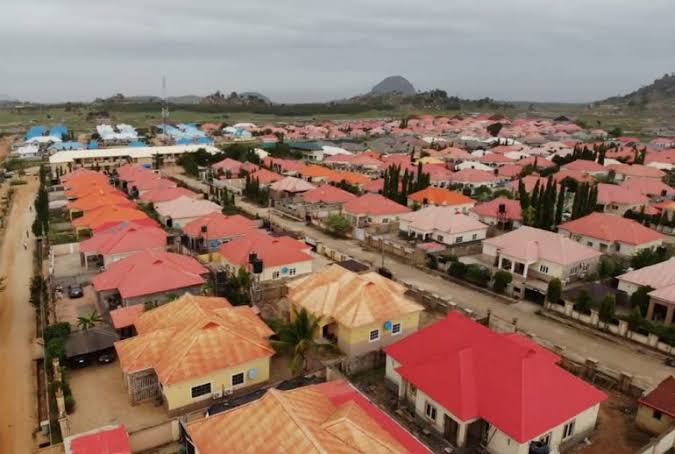

Nigeria’s deepening economic relationship with Saudi Arabia is opening another window for investment in construction and housing, but the opportunity is unfolding against a difficult reality: building costs remain high, petrol is still expensive and household incomes have not risen enough to make many new homes affordable.
The Federal Government said on September 24, 2026, that Nigeria and Saudi Arabia were broadening economic cooperation in agriculture, energy, investment, aviation, fintech and trade. Information Minister Mohammed Idris said at the Saudi National Day reception in Abuja that Nigeria welcomed Saudi investors and businesses in infrastructure, mining, technology and other productive sectors.
Housing is one area where that relationship has already produced discussions about investment and local production.
On January 30, 2026, former Housing and Urban Development Minister Ahmed Musa Dangiwa met Saudi Housing Minister Majed bin Abdullah Al-Hogail on the sidelines of the Real Estate Future Forum in Riyadh. Dangiwa presented Nigeria’s Renewed Hope Housing Programme and the Building Materials Manufacturing Hubs as opportunities for Saudi investors to participate in local production, reduce construction costs and strengthen the domestic construction value chain.
The significance now is less about the January meeting itself and more about what happens if Saudi capital eventually enters Nigeria’s housing market at scale.
For Nigerian manufacturers, that could mean stronger demand for cement, steel, tiles, doors, sanitary ware, windows and other construction products. Local factories could expand production, invest in technology and create more jobs if major housing developments source substantially from domestic suppliers.
But the opposite question is equally important.
If foreign-backed developments rely heavily on imported finished materials and overseas supply chains, more housing could be delivered without generating the same level of demand for Nigerian manufacturers. No project-specific procurement arrangement has been announced that would establish such a preference for local suppliers, making local-content implementation an important issue for future projects.
Nigeria’s construction industry is already trying to strengthen domestic supply chains. At Big 5 Construct Nigeria in Lagos from September 22 to 24, 2026, more than 170 exhibitors from over 20 countries showcased construction materials, equipment and technology. The Federal Ministry of Information said the event connected international suppliers with Nigerian contractors, developers and other industry players, while local manufacturer CDK Integrated said the market was creating opportunities for domestic manufacturers and suppliers.
However, higher supply does not automatically translate into affordable homes.
The Guardian reported on September 7, 2026, that a 50kg bag of cement, which sold for between ₦11,500 and ₦12,500 in February, had reached as high as ₦15,000 in some locations. The newspaper attributed the pressure partly to poor roads, logistics costs, distribution bottlenecks and other supply challenges.
The currency environment has improved in some respects. The Central Bank of Nigeria said on September 22 that gross external reserves stood at $55.25 billion as of September 18, 2026, the highest level in 18 years and enough to finance 11.3 months of imports. The CBN also said foreign-exchange pressures had receded and that the stronger external position had supported greater stability in the foreign-exchange market.
That stability could improve planning for businesses with dollar-linked equipment and inputs, but it has not removed the pressure on household budgets.
The Guardian reported on September 21, 2026, that a single urban worker would need about ₦372,300 a month to meet a basic cost-of-living basket under its model, compared with the ₦70,000 national minimum wage. Housing and transport accounted for a significant share of the estimated cost.
Fuel costs add another layer. Dangote Petroleum Refinery cut its ex-gantry petrol price from ₦1,350 to ₦1,325 per litre on September 21, 2026, according to BusinessDay. The reduction followed an ₦85 increase earlier in September, meaning the lower refinery price has not erased the wider cost pressure facing motorists and businesses.
For housing investors, developers and manufacturers, this creates a difficult equation. Nigeria needs more homes, Saudi Arabia offers a potential source of capital and expertise, and local factories need stronger demand. But the final test is whether the resulting projects can connect those three opportunities with the purchasing power of Nigerian households.
The next phase of Nigeria-Saudi housing cooperation will therefore be measured not only by the amount of foreign capital attracted, but also by how much of that investment strengthens local manufacturing, reduces construction costs and produces homes that households can realistically afford.