
Nigeria spent more than ₦1 trillion importing iron and steel products in 2025, according to National Bureau of Statistics (NBS) data cited in a report published on 31 August 2026. The figure exposes one of Nigeria’s biggest industrial contradictions: the country continues to spend heavily on imported steel while its Ajaokuta Steel Complex in Kogi State remains largely inactive after decades of failed revival efforts.
The NBS figures cited in the report show that Nigeria’s iron and steel import bill averaged about ₦526 billion annually over the six years preceding 2025, before rising above ₦1 trillion in 2025. The figures represent recorded imports and do not necessarily capture unreported trade.
The government’s estimate of Nigeria’s wider steel-import dependence is considerably higher. Minister of Steel Development Shuaibu Abubakar Audu said in March 2025 that Nigeria loses about $4 billion annually to steel imports. The minister has argued that developing domestic steel production would reduce foreign-exchange pressure and support industrialisation.
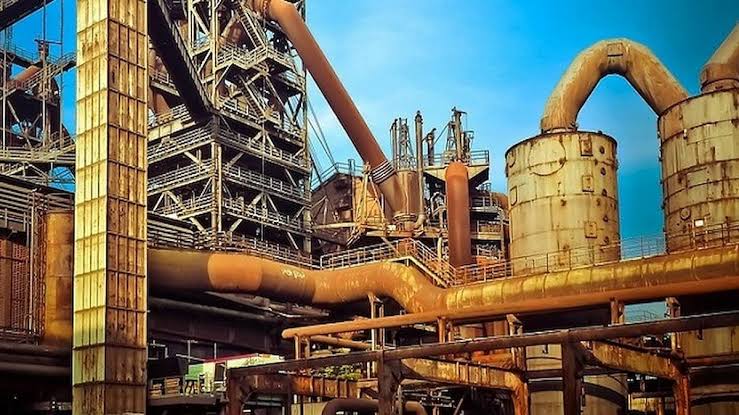
Ajaokuta was conceived as the foundation of Nigeria’s integrated steel industry. The project, which began in 1979 with Soviet assistance, was designed to support steel production for construction, manufacturing and other industries.
More than four decades later, the complex is still awaiting sustained commercial production. The Federal Ministry of Steel Development says a comprehensive technical and financial audit is currently underway to determine the plant’s condition and guide investment decisions. The ministry also says the earlier 2018 technical assessment found the plant generally robust, although parts had deteriorated and some systems required upgrading.
The financial burden of keeping the dormant complex running remains significant. Nigeria’s 2026 budget provides about ₦6.04 billion for Ajaokuta Steel Company, despite the company having no projected operating revenue for the year, according to budget analysis published in January 2026.
The Tinubu administration is now pursuing another revival attempt. On 8 July 2026, Minister Audu said the Federal Government expected to conclude an agreement with a Chinese company before the end of 2026. He estimated that restoring Ajaokuta would require between $1.5 billion and $2 billion, with government seeking investors capable of providing the financing and technical expertise.
Energy supply is also being addressed. In July 2026, the Federal Government and NNPC moved forward with a long-term gas arrangement intended to support Ajaokuta’s eventual revival.
The government has also linked Ajaokuta to defence production. On 10 November 2025, the Ministry of Steel Development announced agreements involving the Ministry of Defence, Defence Industries Corporation of Nigeria (DICON) and Ajaokuta Steel Company to support local military hardware production.
For Nigeria, the issue is bigger than one abandoned industrial project. Every year that domestic steel production remains weak, the country continues to depend on foreign suppliers for a basic industrial input.
The latest revival plan therefore faces a simple test: can Ajaokuta finally move from decades of promises to commercially sustainable steel production?