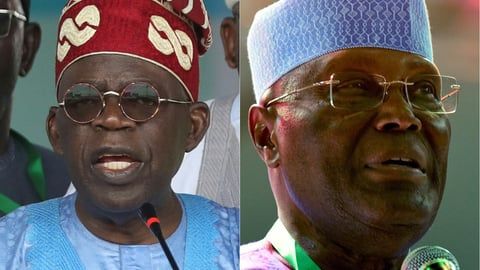

Former Vice President Atiku Abubakar has criticised the Federal Government’s rising domestic borrowing, saying it is making it harder for Nigerian businesses to access credit and threatening jobs across the country.
Atiku, who is the presidential candidate of the African Democratic Congress, ADC, raised the concern in a statement issued by Phrank Shaibu, his Senior Special Assistant on Public Communication. He accused the Bola Tinubu administration of fiscal indiscipline and questioned why government borrowing has continued to increase despite higher crude oil prices and improved government revenue.
According to him, the Federal Government borrowed N24.7 trillion from the domestic market between January and August 2026. He said the figure represents a 90.5 percent increase compared with the N12.98 trillion borrowed during the same period in 2025.
“At the beginning of this fiscal year, the Federal Government budgeted on an oil benchmark of $64.85 per barrel. Today, crude oil prices have risen substantially above that benchmark.”
Atiku argued that higher oil prices should have reduced the government’s need to borrow, particularly after the removal of the fuel subsidy and the floating of the naira.
“Yet, instead of this windfall translating into lower borrowing, stronger businesses and relief for Nigerians, the Federal Government went into the domestic market and borrowed a staggering ₦24.7 trillion between January and August 2026.”
He questioned how the government was using the additional revenue generated from the economic changes introduced by the administration. “Tinubu removed fuel subsidy and told Nigerians the sacrifice would free up money. He floated the naira and government revenues consequently received a massive nominal boost,” Atiku said. “Oil prices have risen sharply. Revenues have improved. Yet the borrowing has not gone down; it has exploded. So the question Nigerians must ask again is very simple: where is the money going?”
The former vice president said the government’s heavy presence in the domestic credit market was also making it difficult for private businesses to secure affordable loans. He cited figures showing that credit to the government increased by 43 percent, while credit to the private sector grew by only 9.6 percent.
“Government credit is expanding about 4.5 times faster than credit to businesses,” he said.
Atiku argued that the situation could weaken businesses, discourage investment and reduce employment opportunities. He said businesses need affordable financing to expand their operations, increase production and employ more workers.
“But under Tinubu’s economic policy, the exact opposite is happening,” he said. “The public sector is exerting an increasingly parasitic effect on the private sector: consuming the credit, capital and financial oxygen that productive businesses desperately need.”
According to Atiku, banks may prefer lending to the government because such investments can offer attractive returns with lower risks than lending to private businesses.
“When banks can lend to government at attractive, risk-free rates, why would they lend cheaply to the manufacturer in Aba, the furniture maker in Kaduna, the agro-processor in Kano or the young entrepreneur in Lagos?” he asked. He warned that higher borrowing costs could force businesses to delay expansion plans and struggle with rising production expenses.
“The result is obvious: businesses pay more for credit, expansion is postponed, factories struggle, jobs disappear and the cost of producing everything from food to household goods rises,” he said. “This government is not merely borrowing money; it is borrowing away the future of Nigerian businesses.”
Atiku said Nigeria needed to reduce its dependence on domestic borrowing and create more room for private sector growth.
“My administration will impose fiscal discipline, cut waste, prioritise productive expenditure and progressively reduce the government’s suffocating dependence on the domestic credit market,” he said. “Government must make room for the private sector to breathe, invest, produce and employ.”
President Tinubu, however, has defended borrowing when necessary, saying the government must be able to finance its responsibilities while ensuring it can repay its debts.
“If we have to borrow, we borrow. Borrowing is not leprosy; we just have to work hard to be able to pay for it,” the president said.
The disagreement highlights the wider debate over Nigeria’s borrowing strategy and its impact on businesses, investment, employment and economic growth.