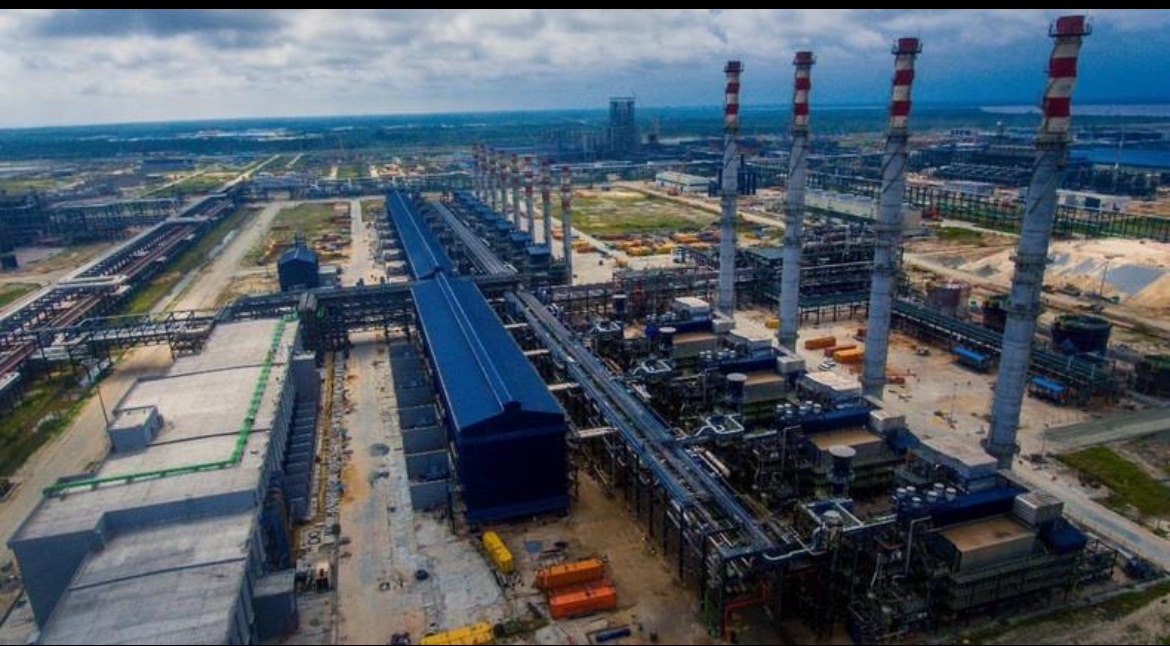

The Dangote Petroleum Refinery has defended its recent petrol price increases, saying the cost of crude oil purchased earlier is a major factor behind the latest adjustments.
The explanation comes as petrol prices continue to rise across Nigeria, with the product selling between N1,310 and N1,400 per litre in different parts of the country.
In Lagos and Ogun states, petrol is selling for around N1,310 per litre, while prices in northern states and other areas farther from the refinery have climbed to N1,350 or more. In some locations, the pump price is reportedly approaching N1,400 per litre.
The latest increase followed Dangote Refinery’s decision to raise its petrol gantry price by N65, from N1,200 to N1,265 per litre, effective August 29. This was the refinery’s third price adjustment within eight days.
The repeated increases have attracted attention because they came at a time when international crude oil prices were declining.
However, a senior Dangote Refinery executive explained that current global crude prices do not immediately determine the cost of petrol being produced from crude already purchased by the refinery.
According to the official, there is a considerable gap between buying crude oil and eventually receiving it at the refinery. The process involves negotiating the purchase, securing a loading window, chartering a vessel, loading the crude, transporting it to Nigeria and getting it discharged into the refinery’s storage facilities.
This means crude being processed today may have been purchased weeks earlier when international prices were significantly higher.
The executive also pointed to the refinery’s existing crude inventory. He argued that the company could still have large volumes of crude bought at higher prices in its tanks even after global oil prices fall.
The refinery’s position is that immediately reducing petrol prices whenever international crude prices decline could result in the company selling fuel produced from expensive crude at prices based on cheaper replacement supplies.
Dangote’s gantry price has now increased by N100 per litre in just eight days. The refinery first raised the price from N1,165 to N1,185 on August 21 before increasing it to N1,200 on August 26. The latest adjustment took the price to N1,265 on August 29.
The coastal price of PMS also increased during the latest adjustment.
The impact has quickly reached consumers and petroleum marketers. Petrol prices vary across the country partly because transportation and distribution costs increase the further the product moves from the coastal refinery to distant markets.
The development has also renewed questions about how international crude prices translate into domestic petrol prices.
Data from the Major Energies Marketers Association of Nigeria showed that Dangote’s N1,200 gantry price on August 27 was below the estimated import-parity price of N1,222.32 per litre. Following the latest increase to N1,265, the refinery’s price moved above that earlier import-parity estimate.
Meanwhile, the global oil market remains volatile due to geopolitical tensions and uncertainty surrounding crude supplies.
Petroleum marketers say the frequent price changes are making business planning increasingly difficult. Chinedu Ukadike, spokesman for the Independent Petroleum Marketers Association of Nigeria, said marketers are dealing with several factors, including crude oil prices, exchange rates and government policies.
He noted that continued international tensions could lead to further price instability.
For consumers, the latest development means petrol prices could remain unpredictable as long as crude oil prices, exchange rates and other production and distribution costs continue to fluctuate.
The situation also comes amid renewed political debate over fuel subsidies, with former Vice President Atiku Abubakar calling for their reintroduction to reduce pressure on households and businesses.
For now, Dangote Refinery maintains that its pricing decisions are influenced not simply by today’s crude price, but by the actual cost of crude already purchased, transported and stored for production.