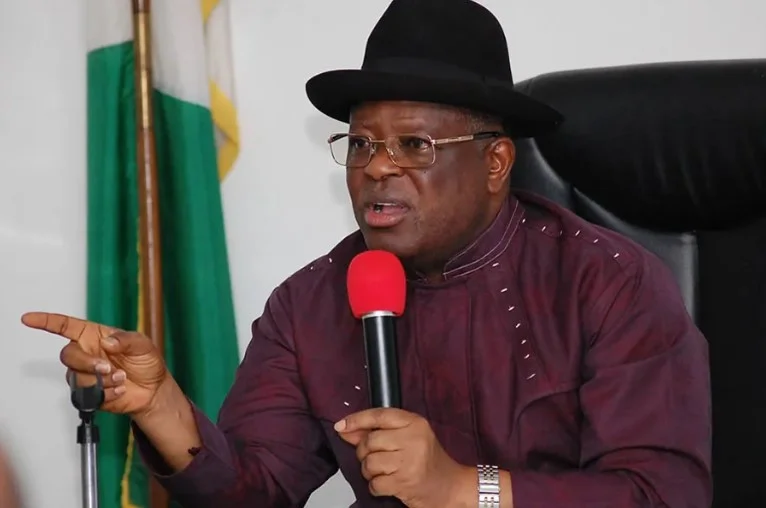

Works Minister David Umahi is leading a high-level inspection of the Benin-Asaba Expressway on Tuesday as severe gridlock on the strategic highway enters its sixth day, putting renewed pressure on the Federal Government to resolve a crisis that is disrupting transport and commercial activity across Edo and Delta states.
Umahi announced the inspection after the flag-off of the Ibadan-Ijebu-Ode road dualisation project. He said the delegation would include members of the Senate and House of Representatives Committees on Works, independent engineers, the concessionaire, ministry lawyers and officials of the Edo State Government. The minister also said President Bola Tinubu had directed urgent action on the corridor.
The immediate focus is the badly affected Benin-Agbor section, where motorists, residents and transport workers have protested against deteriorating road conditions and prolonged traffic jams. Reports indicate that some travellers have spent hours or even nights trapped in traffic, raising concerns about the wider economic cost of delays on a major inter-regional route.
Umahi blamed the latest disruption on problems surrounding the private-sector concession arrangement. He alleged that the concessionaire removed more than 30 kilometres of asphalt without completing the planned rehabilitation, leaving motorists to bear the consequences.
The 125-kilometre Benin-Asaba corridor operates under a 25-year Highway Development and Management Initiative concession. Federal government records identify Africa Plus Partners Nigeria Limited and the Benin-Asaba Expressway Concession Company as the private-sector partners responsible for the project.
The concessionaire, Benin-Asaba Expressway Concession Company Limited (BAECC), disputes any suggestion that work has simply been abandoned. In a statement published on Tuesday, BAECC said it had carried out rehabilitation and palliative works since mobilising in 2025 but blamed prolonged rainfall, drainage problems and heavy traffic for construction setbacks. It said the first 65-kilometre phase is scheduled for completion by April 2027, with the second phase expected about 18 months later.
That competing account makes Umahi’s inspection significant. The immediate challenge is not only to restore traffic flow but also to determine whether contractual obligations, construction methods and project timelines are delivering value on one of Nigeria’s most important economic corridors.
The Federal Government’s response will be closely watched by road users, businesses and investors as the administration tests whether private-sector concessions can deliver major infrastructure projects without leaving motorists exposed when execution falters.