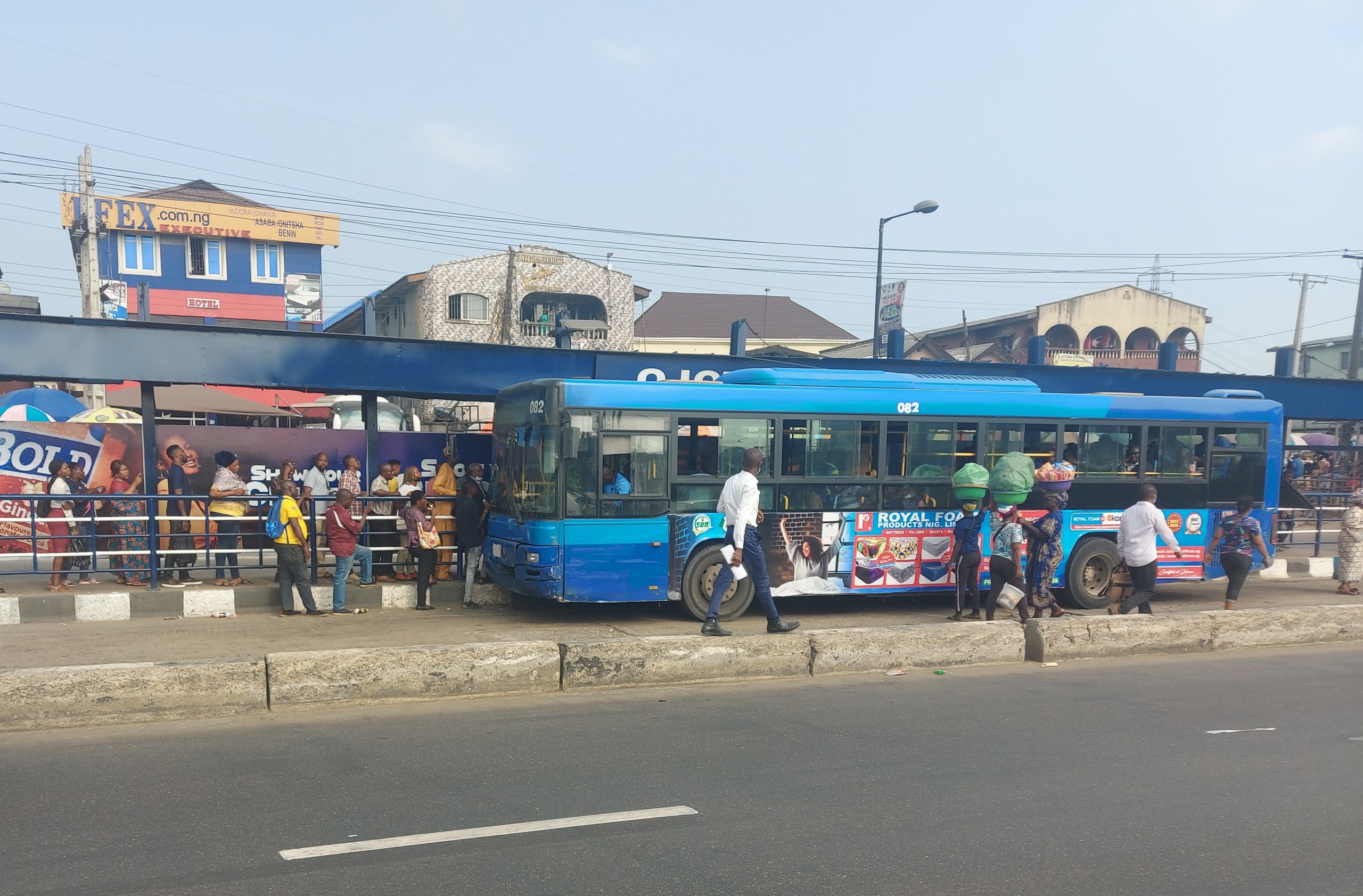

The cost of replacing buses destroyed during the 2020 #EndSARS unrest has emerged as a major financial hurdle for Lagos State, with the price of a single BRT bus rising from about ₦80 million to approximately ₦280 million.
Lagos State Deputy Governor Obafemi Hamzat said the sharp increase in vehicle costs has contributed to the government’s delay in fully replacing buses lost during the unrest.
According to Hamzat, buses that cost about ₦80 million when purchased before the #EndSARS crisis now cost roughly ₦280 million each.
That represents a 250 per cent increase in the reported unit price, meaning the state would need to spend three-and-a-half times as much to acquire a comparable bus today.
“If you recall, 200 of those buses were burnt. We bought those buses at that time for ₦80 million per bus. Now, it’s about ₦280 million per one,” Hamzat said during an interview with Nigeria Info FM.
At the current price cited by the deputy governor, replacing 200 buses would cost about ₦56 billion, compared with approximately ₦16 billion at the earlier price, a potential difference of ₦40 billion.
However, there is an important discrepancy in the figures.
Lagos State previously reported that 80 BRT buses were destroyed during the 2020 unrest, including 23 large buses at Ojodu and 57 medium-sized buses at Oyingbo. Contemporary reports valued the losses at about ₦3.9 billion.
Hamzat’s latest reference to 200 buses therefore differs from the earlier state figure and should be clarified by the government before the 200 figure is presented as the definitive number of buses destroyed.
The replacement challenge comes as Lagos continues to face pressure to expand public transport capacity for its growing population.
Hamzat said the government had expected some buses to require replacement after several years of operation, but the destruction of vehicles during #EndSARS added to the pressure on the existing fleet.
The rising cost of buses also reflects broader pressures affecting Nigeria’s transport sector, including higher vehicle, spare-parts and maintenance costs.
Rather than relying solely on government procurement, the state is increasingly looking to private-sector participation to expand the public transport fleet.
For commuters, however, the issue goes beyond the cost of individual buses. Fewer available vehicles can translate into longer waiting times, overcrowding and greater pressure on existing transport services.
Six years after the #EndSARS unrest, the cost of rebuilding part of Lagos’ BRT fleet demonstrates how an infrastructure loss can become significantly more expensive to reverse over time.