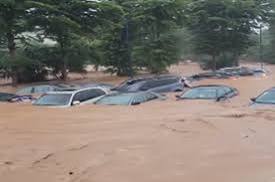

Heavy rainfall flooded parts of Wuse 2 in Abuja today, affecting motorists and residents and renewing concerns about the capital’s vulnerability to urban flooding.
Residents shared videos and photographs on social media showing water accumulating on roads and surrounding areas in the commercial district after the downpour. TVC News reported that motorists and residents were affected, while social media users claimed that some vehicles were submerged.
The flooding was also reported in other parts of the Federal Capital Territory, underscoring the wider impact of intense rainfall across Abuja.
One social media user, Obiasogu David, posted that an event centre in Abuja had been completely submerged. Another user, Inalegwu, called for urgent action by the FCT Administration in areas vulnerable to flooding. TVC News reported that there was no official statement from the FCT minister or other relevant authorities on the incident at the time of its report.
The claims about submerged vehicles and the event centre are based on social-media reports and should therefore be treated as resident accounts rather than independently verified damage assessments.
The incident comes as federal agencies continue to warn of elevated flood risks across Nigeria.
The Nigeria Hydrological Services Agency’s 2026 Annual Flood Outlook identifies the Federal Capital Territory among areas exposed to flooding this year. NIHSA has also established a flood-forecast dashboard providing risk assessments and monitoring information across the country.
Reuters reported in April that Nigeria’s 2026 flood outlook warned that major cities including Abuja, Lagos and Port Harcourt could experience severe urban flooding.
The Nigerian Meteorological Agency’s 2026 Seasonal Climate Prediction forecasts normal to above-normal rainfall across parts of the country and a normal-to-late end to the rainy season, highlighting the need for continued preparedness.
For businesses and residents, repeated flooding can carry significant costs, including disrupted movement, damage to vehicles and property, delayed deliveries and lost trading hours.
Today’s flooding therefore represents more than a temporary disruption. It highlights the continuing challenge of managing stormwater in a rapidly expanding capital city.
As the rainy season continues, the incident is likely to intensify calls for stronger drainage maintenance, better flood-risk management and faster intervention in Abuja’s vulnerable locations.
The immediate priority for authorities is to ensure that flood-prone areas are identified and monitored, drainage channels remain functional and early warnings translate into timely action before subsequent heavy rainfall produces further disruption.