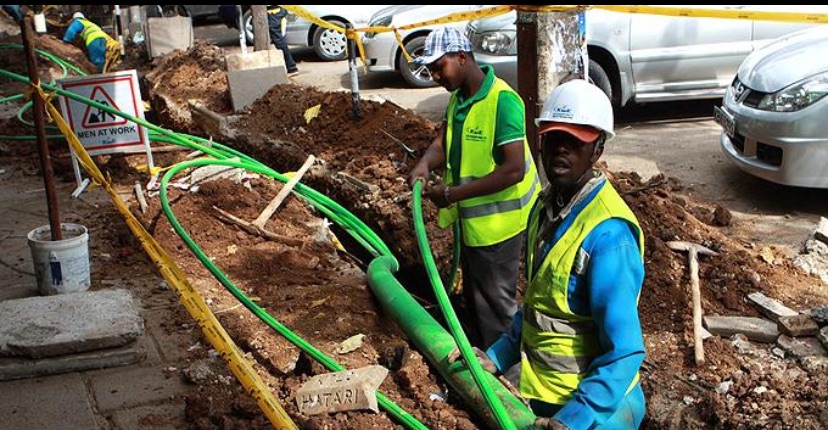

Nigeria recorded more than 5,000 incidents of fibre-optic cable damage between January and June 2026, raising concerns over the growing impact of road construction and excavation activities on the country’s digital infrastructure.
The Nigerian Communications Commission (NCC) disclosed the figure on Tuesday during a stakeholders’ workshop focused on protecting fibre-optic cables during road construction and rehabilitation projects.
NCC Executive Vice-Chairman, Dr Aminu Maida, said most of the reported incidents were connected to road construction, excavation and other civil engineering activities.
According to Maida, the frequent damage to fibre cables poses a major threat to telecommunications services and can create financial losses for operators, businesses and ordinary Nigerians.
He explained that the consequences go beyond telephone and internet services because fibre infrastructure supports several important areas of the economy.
Banking transactions, government services, healthcare, education, e-commerce, security operations and emergency communications can all be affected when major fibre routes are damaged.
Maida recalled that in February 2024, widespread fibre cuts contributed to a major disruption on the network of one telecommunications operator. Millions of subscribers were reportedly unable to make calls, send messages or access the internet for several hours.
The disruption also pushed many subscribers to other networks, creating additional congestion and showing how damage to one network can have consequences across the wider telecommunications system.
The NCC chief said the solution was not to blame road contractors or telecommunications companies but to improve cooperation between all parties before construction begins.
He noted that road contractors need access to information about the location of underground fibre cables, while telecom operators and government agencies must provide the necessary coordination.
To address the problem, the Permanent Secretaries of the Federal Ministry of Works and the Federal Ministry of Communications, Innovation and Digital Economy have established a Standing Committee on the Protection of Fibre Optic Cables.
The committee is expected to develop better coordination procedures for activities before, during and after road construction. Officials from the Office of the National Security Adviser have also been included to provide additional oversight.
Maida said telecommunications infrastructure has been classified as Critical National Information Infrastructure. He therefore urged construction companies, engineers, contractors and site supervisors to understand the risks involved when working around fibre infrastructure.
The Permanent Secretary of the Ministry of Communications, Innovation and Digital Economy, Engr. Nadungu Gagare, represented by Stanley Musa, said protecting fibre infrastructure should be treated as a shared national responsibility.
He warned that continued fibre damage could undermine Nigeria’s efforts to expand broadband access, while also increasing operating costs and discouraging investment in the digital economy.
The ministry is working with relevant stakeholders to improve compliance with right-of-way regulations and strengthen coordination around telecom infrastructure.
The Office of the National Security Adviser also warned that fibre damage could affect economic productivity, government operations and essential public services.
As Nigeria continues to expand its digital economy, the protection of fibre-optic cables is becoming increasingly important. Better planning between road authorities, contractors, telecom companies and government agencies could help reduce unnecessary disruptions and protect the infrastructure supporting the country’s growing digital economy.