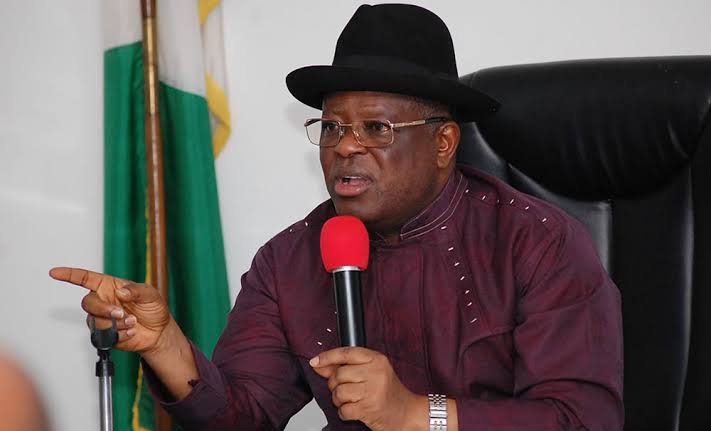

The Federal Government has stepped up its nationwide road and bridge rehabilitation programme, with Minister of Works David Umahi announcing the reconstruction and rehabilitation of major infrastructure across the country as part of efforts to address years of deterioration on Nigeria’s road network.
Speaking at a stakeholder engagement and project flag-off ceremony in Lagos on Sunday, Umahi said the Federal Government had undertaken more than 260 emergency road rehabilitation projects nationwide, with spending on the interventions exceeding N250 billion.
The minister said the scale of the intervention reflected the administration’s efforts to tackle critical infrastructure gaps and improve the condition of roads and bridges that have suffered from prolonged underinvestment and structural deterioration.
As part of measures to strengthen accountability, Umahi said the Ministry of Works had opened its ongoing projects to scrutiny by the Independent Corrupt Practices and Other Related Offences Commission (ICPC), while also requesting oversight from the Economic and Financial Crimes Commission (EFCC).
“Under President Bola Tinubu, for the first time, we exposed all the ongoing projects to the ICPC to go around, check procurement, check execution, and give us queries where we have erred, and we will take corrections,” Umahi said.
The minister’s comments come as the government faces growing technical and financial challenges in maintaining ageing infrastructure, particularly in Lagos, where several major bridges require extensive rehabilitation.
Giving an update on the Eko Bridge, Umahi said engineers were closely monitoring cracks on the structure as remedial work is being planned. He said only part of the carriageway had been closed to traffic in order to minimise disruption while investigations and repairs continue.
According to the minister, the proposed remedial intervention will include the reinstallation of about seven piles and construction of a new pile cap. He said the measure could extend the bridge’s service life by an estimated 15 to 20 years while a more permanent solution is developed.
The government is also intensifying efforts to improve safety and manage activities along the Lagos-Calabar Coastal Highway.Umahi
Umahi said 40 highway guards had been deployed along the corridor to address activities including hawking, loitering, commercial motorcycle operations and indiscriminate dumping of refuse.
The latest intervention adds to a series of Federal Executive Council approvals for road infrastructure. The government approved more than N400 billion for various road projects in November 2025, while another major approval in March 2026 involved funding for the reconstruction of the 103-kilometre Ibadan-Ife-Ilesa road.
The sustained government spending on transport infrastructure could provide additional demand for Nigeria’s construction value chain, including cement, steel, aggregates, asphalt, engineering services, heavy equipment and other building materials.
For cement manufacturers and construction companies, a broader pipeline of federally funded road and bridge projects could support volumes and revenue, particularly if projects move from approval to actual execution at a faster pace.
However, the economic benefits will depend heavily on implementation. Analysts and investors are likely to monitor project completion rates, contractor payments, procurement compliance, inflation and foreign-exchange-related cost pressures, all of which could affect the final cost and delivery timelines of major infrastructure projects.
The decision to involve anti-corruption agencies in project monitoring could also strengthen confidence in public procurement if it translates into greater transparency, tighter cost controls and improved project delivery.
For Nigeria, the key test will therefore be whether the government’s increased infrastructure commitments can be converted into durable roads and bridges without excessive cost escalation or delays, while maintaining fiscal discipline and accountability.