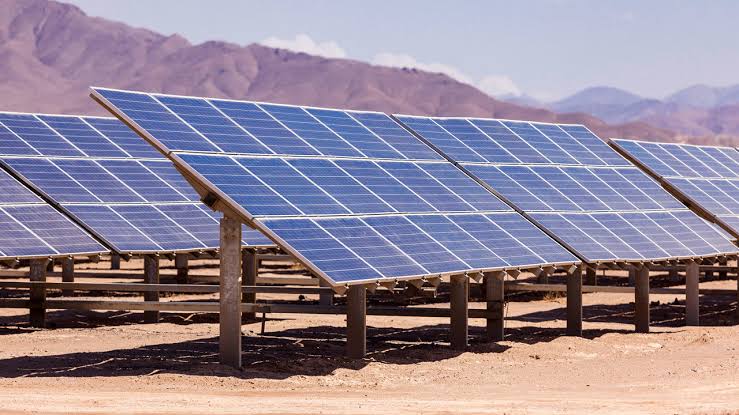

Nigeria’s off-grid solar industry is rapidly transforming the country’s electricity market as businesses and households increasingly turn to renewable energy to offset unreliable grid supply and rising fuel costs.
Nigeria installed a record 803 megawatts (MW) of new solar photovoltaic (PV) capacity in 2025, representing a 141% increase from the previous year and making it Africa’s second-largest solar market after South Africa, according to the Global Solar Council’s Africa Market Outlook for Solar PV 2026–2029. The report estimates Nigeria’s cumulative installed solar capacity at about 1.19 gigawatts (GW) by the end of 2025, with off-grid systems, including solar home systems, commercial and industrial rooftop installations, and mini-grids, accounting for the overwhelming majority of deployed capacity. It also reported battery energy storage growing from roughly 10 megawatt-hours (MWh) to 40.6 MWh, underscoring rising demand for reliable backup power.
The expansion reflects growing demand for alternatives to Nigeria’s fragile electricity network. According to the World Bank, around 90 million Nigerians still lack access to electricity, one of the world’s largest electricity access deficits. Businesses and households also continue to contend with an unreliable national grid, prompting increased investment in self-generation and distributed renewable energy solutions.
Industry analysts say the economics of solar have become increasingly attractive as diesel prices remain elevated and solar equipment costs continue to decline. Commercial and industrial users are increasingly replacing diesel generators with captive solar systems, enabling them to reduce operating costs while securing more predictable electricity supplies through long-term power purchase agreements.
Policy support is also helping to accelerate deployment. The Federal Government’s Distributed Access through Renewable Energy Scale-up (DARES) programme, backed by the World Bank, aims to expand electricity access through mini-grids and standalone solar systems. Separately, the Nigerian Electricity Regulatory Commission (NERC) increased the capacity threshold for interconnected mini-grid projects from 1 MW to 10 MW in 2026, a move intended to encourage larger private-sector investments in distributed electricity infrastructure.
Looking ahead, the Global Solar Council expects distributed solar to remain one of the fastest-growing segments of Africa’s energy transition, supported by declining technology costs, stronger regulatory frameworks and expanding private investment. Reuters reported that Africa added a record 4.5 GW of solar capacity in 2025, with Nigeria accounting for 803 MW, highlighting the country’s growing role in the continent’s renewable energy expansion.
Despite the strong momentum, challenges remain. Seasonal weather patterns can reduce solar output, while concerns persist over the influx of substandard solar equipment and the need for improved financing, grid integration and quality assurance. Nevertheless, industry observers believe Nigeria’s large electricity deficit, combined with supportive policies and sustained investor interest, positions the off-grid solar market for continued long-term growth.