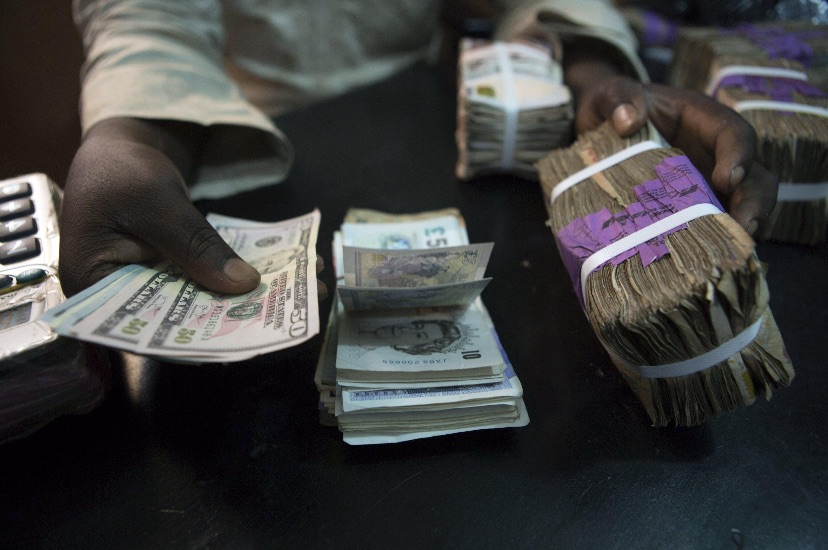

The Nigerian naira is facing renewed pressure against the United States dollar as fuel importers increase their demand for foreign exchange to buy petroleum products from overseas.
Market observers say the rising need for dollars by licensed fuel importers could weaken the local currency in the coming days, despite efforts to strengthen Nigeria’s economy and improve local refining capacity.
According to a Reuters market report, the naira is expected to lose some value against the dollar over the next week, joining the currencies of Ghana and Uganda that are also projected to weaken. Meanwhile, Kenya’s shilling and Zambia’s kwacha are expected to remain relatively stable.
The report linked the expected decline in the naira to increased foreign exchange demand from companies importing refined petroleum products. These importers recently received approval from the Nigerian Midstream and Downstream Petroleum Regulatory Authority (NMDPRA) to continue bringing fuel into the country.
At the official foreign exchange market, the naira traded around N1,368 per dollar on Thursday, compared with N1,383 per dollar a week earlier. In the parallel market, the exchange rate remained around N1,420 per dollar, showing continued pressure on the local currency.
Currency traders believe the situation could become more challenging as fuel importers purchase larger amounts of dollars to build fuel reserves ahead of future demand.
The increase in fuel imports has also sparked fresh debate within Nigeria’s downstream petroleum sector. Many industry stakeholders argue that the country should rely more on locally refined fuel instead of importing products that require large amounts of foreign exchange.
The Dangote Petroleum Refinery has repeatedly criticised the continued approval of fuel imports, insisting that its production capacity is sufficient to meet a significant share of Nigeria’s petrol demand. The refinery has argued that importing fuel when local supplies are available places unnecessary pressure on the nation’s foreign exchange reserves.
The Independent Petroleum Marketers Association of Nigeria (IPMAN) has also called on the Federal Government to review its import policy. The association believes imported petrol has become more expensive than fuel refined locally, making it difficult to achieve stable prices in the market.
According to IPMAN’s National Publicity Secretary, Chinedu Ukadike, the latest import licences have failed to reduce fuel prices as expected. Instead, he said some imported petrol is selling for about N1,350 per litre, which is higher than the price offered by the Dangote refinery.
He explained that the original goal of allowing fuel imports was to create competition that would help reduce domestic prices. However, he argued that the policy has produced the opposite result by increasing price volatility and adding pressure on the naira through higher demand for dollars.
Ukadike also questioned the quality and cost of imported fuel, saying products sourced from neighbouring countries are significantly more expensive than locally refined alternatives. He warned that continuing to spend scarce foreign exchange on costly imports weakens the naira and creates unnecessary uncertainty for marketers.
Despite these concerns, some industry experts believe Nigeria should avoid depending on a single refinery for its fuel supply. They argue that allowing multiple suppliers into the market encourages competition, improves energy security, and reduces the risk of shortages if one producer experiences operational challenges.
As Nigeria continues its push toward greater local refining, policymakers face the difficult task of balancing competition, stable fuel prices, and the need to protect the value of the naira. Many analysts believe future decisions on fuel import licences will play an important role in determining both the country’s exchange rate and the overall stability of the downstream petroleum sector.