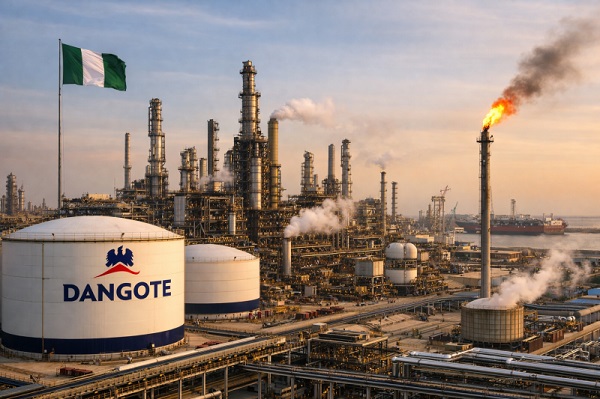

The Dangote Petroleum Refinery is helping shield Nigeria from rising global fuel price pressures, according to the latest market intelligence from S&P Global Commodity Insights, as higher international gasoline prices and freight costs continue to squeeze fuel markets.
S&P Global said the refinery has become a key price stabiliser in Nigeria, with domestic gasoline prices effectively being “capped by Dangote prices” despite mounting global market pressures.
The report noted that freight rates for transporting clean petroleum products from Northwest Europe to West Africa have risen from $29.70 to $37.12 per metric tonne, driven by vessels being redirected to alternative markets. It added that tighter diesel supplies, partly linked to reduced Russian Black Sea cargoes, have also supported higher regional gasoil prices.
Despite these developments, Dangote Refinery has maintained competitive coastal sales prices, limiting opportunities for fuel importers to profit from bringing products into Nigeria. According to S&P Global, higher product values in regional trading hubs such as Lomé have effectively closed the arbitrage window, making imports less competitive.
Since late May, the refinery has announced a series of reductions in the ex-depot prices of refined petroleum products, cutting the price of Premium Motor Spirit (PMS) by more than ₦200 per litre, Automotive Gas Oil (diesel) by ₦300 per litre, and Jet A1 aviation fuel by ₦520 per litre.
The refinery’s pricing strategy has helped moderate domestic fuel costs at a time when international markets remain volatile due to geopolitical tensions, supply constraints and rising shipping costs.
S&P Global said Dangote’s growing role in supplying refined petroleum products is reshaping fuel trade dynamics in West Africa, where many countries have historically relied on imported fuels. Market participants told the commodity intelligence firm that the refinery’s pricing is increasingly influencing regional product markets and reducing the competitiveness of imported supplies.
The Dangote Refinery, which has an operating capacity of about 700,000 barrels per day, is Africa’s largest single-train refinery and is expected to play an increasingly significant role in meeting Nigeria’s domestic fuel demand while supplying refined products to regional export markets.
Analysts say the refinery’s ability to supply the domestic market has reduced Nigeria’s exposure to fluctuations in international fuel prices and import-related logistics costs, highlighting the growing importance of local refining capacity in strengthening the country’s energy security.