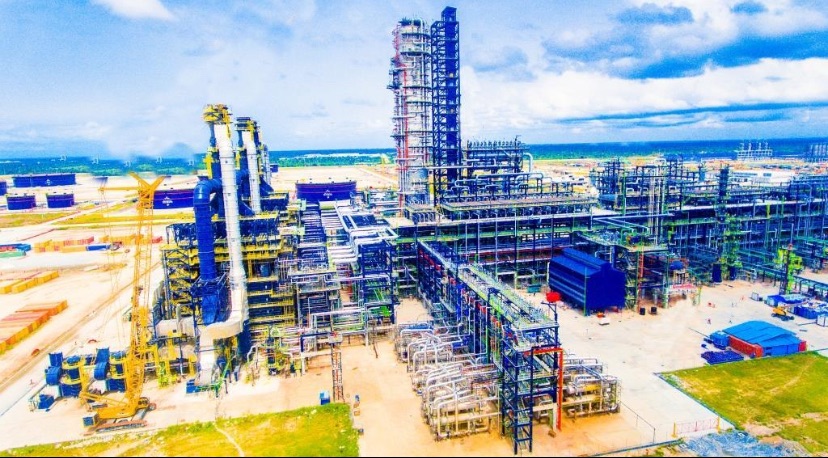

Dangote Petroleum Refinery & Petrochemicals has explained why the cost of producing fuel in Nigeria remains higher than many people believe, despite the recent decline in global crude oil prices.
The company said the actual cost of crude oil processed at its refinery is much higher than the international Brent crude price often reported in the media. According to the refinery, the average landed cost of crude stood at about 124.80 dollars per barrel in May and 95.25 dollars per barrel in June, compared with the current Brent benchmark price of around 71.01 dollars per barrel.
The refinery explained that crude oil is not purchased based only on the Brent benchmark. Instead, it buys crude using the Dated Brent pricing system, which includes additional costs such as market premiums, freight charges, shipping, and logistics. These extra expenses increase the final cost of crude before it reaches the refinery.
Despite paying higher prices for crude oil during the period, Dangote Refinery said it chose not to transfer the full burden to consumers. Instead, it absorbed a large part of the additional costs to help keep fuel prices stable and reduce the impact of global oil market fluctuations on Nigerians.
According to the company, this strategy has allowed petroleum products sold in Nigeria to remain cheaper than those in several neighbouring countries, even after taxes are considered. It added that as cheaper crude oil cargoes gradually enter its production process, the savings are being passed on to consumers through phased reductions in fuel prices.
The clarification comes shortly after the refinery announced another cut in the ex-depot price of Premium Motor Spirit (PMS), commonly known as petrol. The latest reduction of N50 per litre marks the fourth price cut made by the company within one month.
Since May 30, 2026, the refinery has reduced the ex-depot price of petrol by a total of N200 per litre, bringing the gantry price down to N1,075 per litre. During the same period, the company also reduced the ex-depot price of Automotive Gas Oil (diesel) by N300 per litre, while the price of Jet A1 aviation fuel dropped by N520 per litre.
Dangote Refinery said these repeated price cuts demonstrate its commitment to ensuring Nigerians benefit whenever production costs begin to decline. The company noted that fuel pricing cannot immediately reflect daily changes in international crude oil prices because crude is purchased several weeks or even months before it is refined.
As a result, petroleum products currently being sold are still being produced from crude oil bought at significantly higher prices. The refinery stressed that its pricing decisions are based on actual production and inventory costs rather than temporary movements in global oil prices.
The company also highlighted the importance of domestic refining, saying its production capacity is now sufficient to meet Nigeria’s fuel demand. According to the refinery, local production strengthens the country’s energy security, reduces dependence on imported fuel, saves foreign exchange, and provides greater price stability for businesses and consumers.
Looking ahead, Dangote Refinery expressed optimism that if global crude oil prices remain favourable and more lower-cost crude enters its operations, Nigerians can expect additional reductions in fuel prices. The company reaffirmed its commitment to supplying high-quality petroleum products at competitive prices while supporting Nigeria’s economic growth and the long-term development of the downstream oil sector.