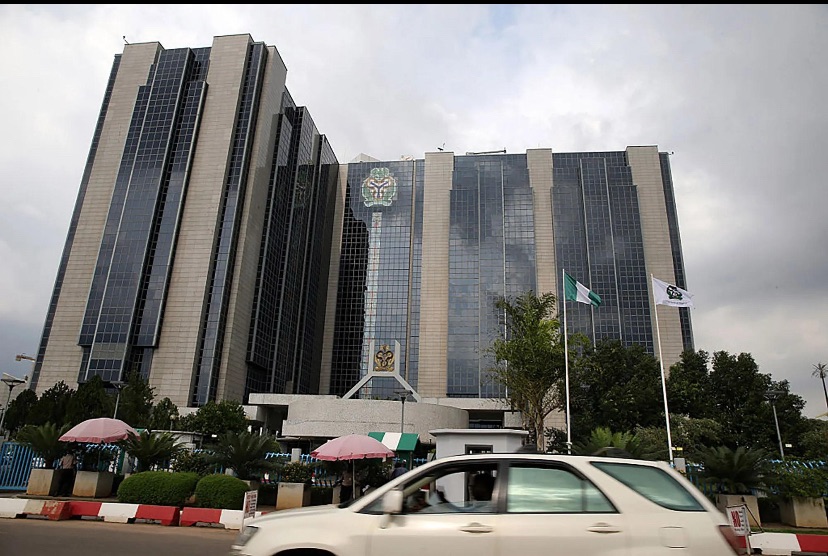

The Central Bank of Nigeria (CBN) has introduced a new guideline that limits the period it can suspend payment obligations and contract termination rights when taking over a troubled bank to a maximum of two business days.
The move is aimed at making the bank resolution process more transparent while giving investors, creditors, financial institutions, and other business partners greater confidence when dealing with Nigerian banks.
The directive was announced in a circular signed by the Acting Director of the Financial Markets Department, Okey Umeano. The circular provides further clarification on how Sections 34(2)(b) and 40(2) of the Banks and Other Financial Institutions Act (BOFIA) 2020 should be applied whenever the CBN intervenes in a distressed financial institution.
According to the apex bank, the law previously allowed it to temporarily suspend certain financial obligations and contract termination rights during bank intervention, but it did not specify how long such suspensions could last. This lack of a clear time limit created uncertainty among investors, creditors, and other counterparties doing business with Nigerian banks.
The CBN explained that the absence of a defined maximum period made it difficult for businesses and financial institutions to effectively manage commercial risks, especially during periods of financial instability involving banks.
To address this concern, the new guideline clearly states that any suspension of payment obligations, delivery commitments, or rights to terminate financial contracts involving a bank under resolution must not exceed two business days. The countdown begins from the date the CBN Governor issues the official written order or notice authorising the intervention.
The bank believes that setting a clear time limit will help improve confidence in Nigeria’s financial sector by reducing uncertainty during periods of bank distress. It also gives businesses and investors a better understanding of what to expect whenever regulatory action becomes necessary.
The CBN noted that the clarification is not intended to weaken its powers to resolve troubled banks. Instead, it is designed to ensure that intervention measures remain effective while protecting the interests of all parties involved.
The regulator added that maintaining a balance between financial stability and investor confidence is essential to the smooth functioning of the banking sector. By limiting the suspension period, counterparties can better plan their financial activities and reduce the risks associated with prolonged uncertainty.
The new framework is also expected to strengthen Nigeria’s banking system by aligning regulatory actions with global best practices, where clear timelines are often provided during bank resolution processes.
Industry stakeholders are expected to welcome the clarification, as it provides greater legal certainty and enhances predictability for financial contracts involving Nigerian banks. It is also likely to improve confidence among both local and foreign investors who rely on clear regulatory procedures when conducting business.
With this latest directive, the CBN says it remains committed to preserving stability in the financial system while ensuring that bank resolution processes are carried out efficiently, fairly, and with minimal disruption to customers, investors, and the wider economy.