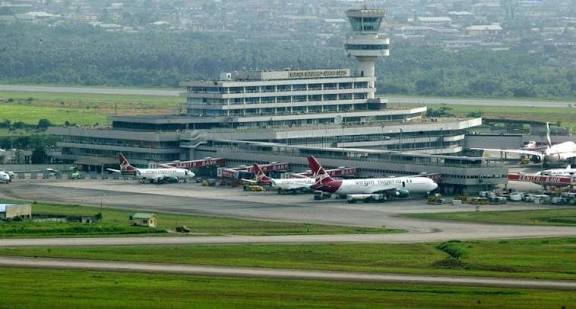

The United Nations World Food Programme (WFP), in collaboration with the Federal Airports Authority of Nigeria (FAAN), has commissioned a $3.4 million (approximately N4.7 billion) humanitarian aviation facility at Muhammadu Buhari International Airport in Maiduguri, strengthening the logistics backbone for relief operations across conflict-affected communities in Northeast Nigeria.
Funded by the United Kingdom’s Foreign, Commonwealth and Development Office (FCDO), the project was developed between April 2024 and March 2026 under the United Nations Humanitarian Air Service (UNHAS). The investment is expected to improve the efficiency, safety and resilience of humanitarian air operations serving one of Africa’s most challenging emergency response environments.
The new complex comprises a dedicated UNHAS passenger terminal, integrated office complex, cargo handling office and a modern flight planning centre. Designed as reinforced safe rooms, the structures are built to withstand security threats while ensuring uninterrupted operations for humanitarian agencies working in the region.
Speaking during the commissioning ceremony, WFP Head of Area Office for Northeast Nigeria, Emmanuel Bigenimana, described aviation as the foundation of humanitarian response in areas where insecurity continues to limit road access.
“Air services are an integral part of the humanitarian response, enabling the delivery of assistance to locations that humanitarian organisations cannot safely access by road,” he said.
Beyond expanding operational capacity, the facility incorporates sustainability and aviation safety features. It is powered entirely by a 239kVA solar energy system comprising 400 solar panels capable of generating around 500 kilowatt-hours of electricity daily, reducing dependence on conventional power sources while ensuring uninterrupted operations.
The aviation hub is also equipped with 64 closed-circuit television (CCTV) cameras, walk-through metal detectors, dual-view X-ray screening equipment and an Automatic Weather Observation System (AWOS), enhancing passenger security, cargo screening and real-time weather monitoring for safer flight operations.
Borno State Governor, Prof. Babagana Umara Zulum, represented by Dr. Babakura Mamman, described the facility as a landmark investment that will strengthen humanitarian coordination and improve the delivery of life-saving assistance across the Northeast.
UK FCDO Development Director Cynthia Rowe said the project represents a long-term investment in Nigeria’s humanitarian and aviation infrastructure, creating lasting value beyond immediate emergency response.
FAAN Board Chairman, Dr. Abdullahi Umar Ganduje, reaffirmed the agency’s commitment to sustaining the infrastructure, noting that ownership would eventually be transferred to FAAN to ensure long-term maintenance and operational continuity.
Humanitarian flights departing daily from Maiduguri transport aid workers, emergency relief supplies and medical equipment to hundreds of thousands of vulnerable people in remote communities, underscoring the strategic importance of reliable aviation infrastructure in supporting humanitarian access and regional stability.