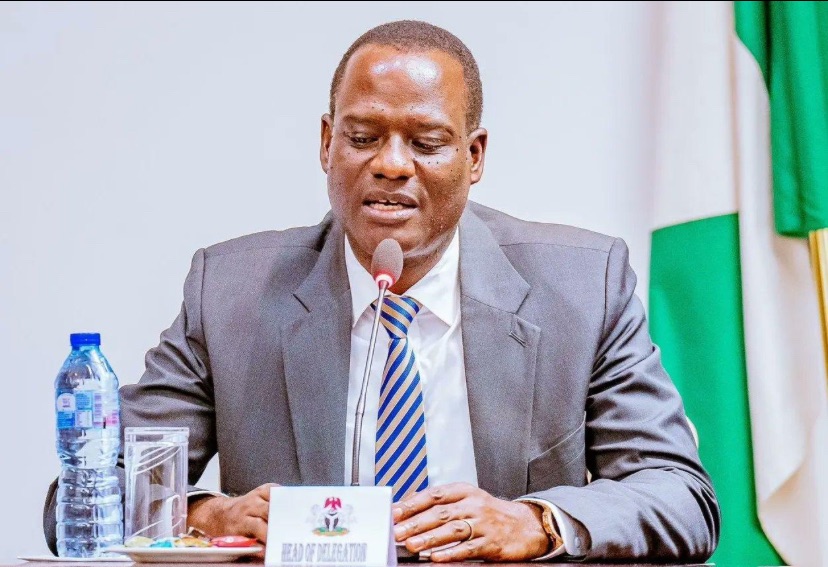

The Federal Government has intensified efforts to improve revenue generation and eliminate financial leakages by engaging commercial banks and other financial institutions on the Revenue Optimisation Assurance Platform (RevOp), a digital system designed to modernise government revenue collection and management.
The initiative was highlighted during a sensitisation workshop organised by the Office of the Accountant-General of the Federation (OAGF) in Abuja. Government officials explained that the platform is expected to transform the way federal revenues are generated, monitored, collected, and reported across Ministries, Departments, and Agencies (MDAs).
Speaking at the event, the Minister of Finance and Coordinating Minister of the Economy, Taiwo Oyedele, represented by the Permanent Secretary for Special Duties, Mohammed Danjuma, described RevOp as a centralised digital platform that enables real-time monitoring and automated processing of government revenue.
According to him, the system replaces outdated and fragmented manual processes that have affected efficient revenue collection for many years. He noted that the platform plays a key role in the government’s broader strategy to strengthen accountability, improve transparency, and reduce revenue losses.
Oyedele stated that while the implementation of the platform has recorded encouraging progress, there are still operational challenges that need attention. One of the major concerns is the limited awareness and understanding of the system among some banking personnel, especially frontline staff responsible for processing payments and assisting customers.
He explained that many bank employees are yet to fully understand how the platform works and the procedures required to support transactions carried out through the system. According to him, these gaps can negatively affect customer experience and reduce the effectiveness of the initiative.
The minister stressed that banks are critical partners in the success of the platform. Beyond receiving payments, financial institutions are expected to ensure that government revenue collection remains smooth, efficient, and accessible to the public.
He urged participating banks to share the knowledge gained during the workshop with branch managers, customer service representatives, tellers, and other staff members who interact directly with customers.
Oyedele also assured stakeholders that the government would continue working closely with financial institutions and other relevant bodies to address operational challenges and improve the performance of the platform.
In her remarks, the Accountant-General of the Federation, Oluwatoyin Madein, represented by her Chief of Staff, Felix Ogundairo, said RevOp was introduced as a strategic tool to improve revenue collection, reconciliation, monitoring, and reporting across government agencies.
She noted that the platform would provide better visibility into government revenues, enhance compliance, eliminate leakages, and support informed decision-making through real-time data and analytical tools.
Also speaking at the workshop, the Director of Revenue and Investment at the OAGF, Adebayo Adewale, revealed that more than 70 percent of Federal Government-owned entities have already adopted the platform. He explained that RevOp is a government-owned solution developed to streamline revenue collection and remove inefficiencies caused by disconnected systems.
Meanwhile, RevOp Product Manager, Idris Dosunmu, said the platform integrates billing, payment, and settlement processes into a single secure system. He added that every transaction is tracked through secure channels, ensuring complete transparency from bill generation to final remittance into government accounts.
The Revenue Optimisation Assurance Platform forms part of the Federal Government’s wider public finance reform agenda aimed at increasing transparency, improving accountability, and boosting non-oil revenue generation through technology.
The platform, which has already onboarded dozens of MDAs, is expected to help curb fraud, strengthen oversight of public funds, and ensure that government revenues are properly accounted for in real time.