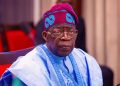
President Bola Tinubu has stated that the removal of fuel subsidy by his administration helped prevent Nigeria from falling into a serious financial crisis and created a pathway for economic recovery.
The President made the remarks during a meeting with state governors at the Presidential Villa, where they gathered to celebrate the Sallah festival and the third anniversary of his administration. According to a statement released by his Special Adviser on Information and Strategy, Bayo Onanuga, Tinubu said the policy was one of the most difficult decisions his government had to make but was necessary to stabilize the nation’s finances.
He explained that before the subsidy was removed, Nigeria was facing growing fiscal challenges that threatened the country’s economic stability. While acknowledging that the decision led to public criticism, legal disputes, and hardship for many citizens, Tinubu maintained that the long-term benefits are beginning to emerge.
According to the President, Nigeria has moved beyond the initial shock caused by the reform and is gradually experiencing economic improvements. He pointed to progress in agriculture, infrastructure development, and housing projects as signs that government policies are beginning to produce positive results.
Tinubu noted that several abandoned road projects across the country have been revived, while new infrastructure projects are also being executed. He said these investments are intended to support economic growth, create jobs, and improve living conditions for Nigerians.
The President also praised state governors for supporting the administration’s reform agenda despite public concerns during the early stages of implementation. He said their cooperation helped maintain confidence in government policies and contributed to the ongoing economic adjustment process.
According to him, many states are now enjoying stronger financial positions than before. He explained that increased government revenues have reduced the need for states to depend heavily on federal government assistance or emergency borrowing to meet obligations such as salary payments.
Tinubu said the reforms have helped improve fiscal discipline and strengthened the financial capacity of governments at different levels. He added that key economic indicators are showing signs of improvement as the administration continues to implement its economic policies.
The President further assured Nigerians that the Federal Government would continue working closely with state governments to improve food security and boost agricultural production nationwide.
Vice President Kashim Shettima also defended the subsidy removal policy, describing it as a bold and necessary step. He argued that the previous subsidy system was affected by inefficiencies and corruption and that reforms were unavoidable if the country was to achieve long-term economic stability.
The removal of fuel subsidy in 2023 remains one of the most significant economic reforms undertaken by the current administration. Analysts estimate that the policy is saving the government between N4 trillion and N6 trillion annually. Revenue shared among federal, state, and local governments has also increased significantly over the past three years.
Despite these gains, the policy has brought challenges for many Nigerians. The sharp increase in fuel prices contributed to higher transportation costs, rising food prices, and increased pressure on households and small businesses. Nevertheless, the government insists that the reforms are necessary to secure Nigeria’s economic future and create a more sustainable financial system.