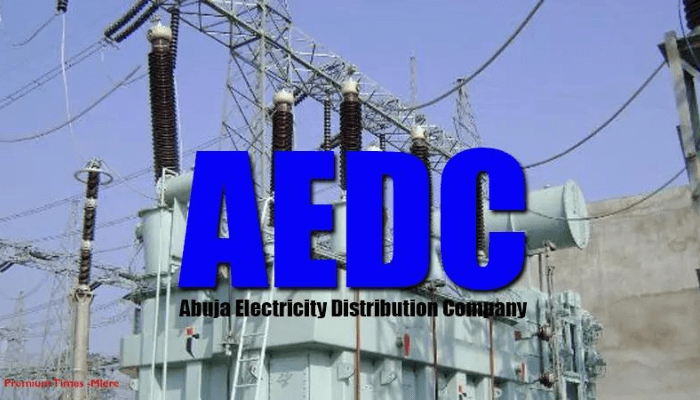

The Abuja Electricity Distribution Company (AEDC) said on Wednesday it was working to restore electricity after a widespread outage cut power across parts of Nigeria’s capital, disrupting homes, businesses, and government offices in the Federal Capital Territory.
In a statement posted on its official X account, the utility attributed the disruption to a technical fault on a major feeder line serving parts of Abuja. It did not disclose the precise location of the fault or its underlying cause. AEDC said it was “working urgently with relevant technical teams to resolve the issue,” adding that restoration efforts were ongoing, but it provided no timeline for full recovery.
The outage, which began in the early hours of Wednesday, was reported across several key districts including Wuse, Garki, and Maitama, according to multiple customer complaints shared on social media. Residents in affected areas described prolonged darkness through the morning, with some reporting intermittent supply in isolated pockets.
Small businesses were among the hardest hit, with operators of cold storage facilities, printing shops, and restaurants reporting immediate disruptions. Many were forced to switch to diesel generators, underscoring the continued reliance on self-generation in Africa’s largest power market and adding to already high operating costs driven by fuel prices.
Abuja’s status as Nigeria’s administrative capital amplified the impact of the outage. The city hosts federal ministries, regulatory agencies, and foreign missions, meaning even short-lived power interruptions can affect public administration, data services, and commercial activity concentrated around government institutions.
AEDC is one of 11 distribution companies created after Nigeria’s power sector privatisation in 2013. Like others in the sector, it continues to face structural constraints including ageing distribution infrastructure, persistent liquidity shortages, and technical losses within the broader Nigerian Electricity Supply Industry (NESI), which has struggled with weak transmission and generation reliability.
Nigeria’s national grid has also experienced repeated instability in recent years, including multiple system collapses in 2024 that triggered widespread blackouts across several states and renewed scrutiny of transmission bottlenecks and distribution inefficiencies.
According to estimates from the National Bureau of Statistics, Nigerian businesses collectively spend hundreds of billions of naira annually on self-generated electricity due to unreliable grid supply, though figures vary depending on methodology and sector coverage. The recurring outages have continued to weigh on productivity and raise operating costs across formal and informal sectors.
The Nigerian Electricity Regulatory Commission (NERC) has service-level rules requiring compensation or rebates for customers affected by prolonged or unmet supply obligations. However, enforcement of these provisions has remained inconsistent, according to industry stakeholders, limiting their practical impact on service quality or utility accountability.