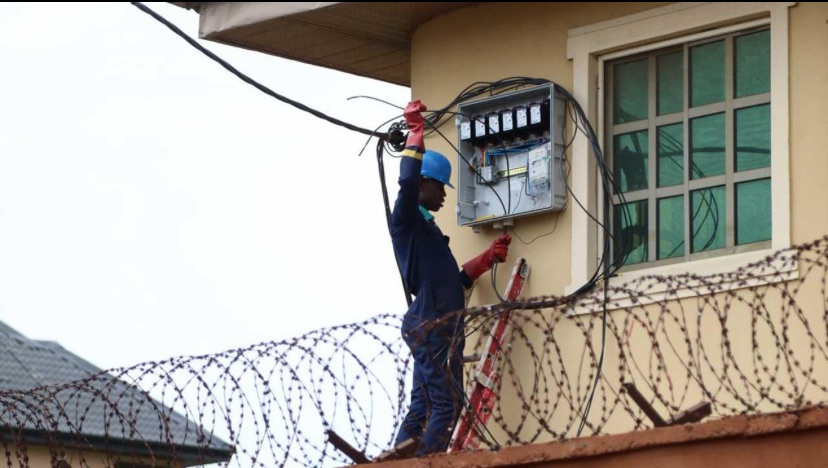

Nigeria’s electricity distribution companies (DisCos) installed more than 241,000 electricity meters within the first two months of 2026 as efforts continue to reduce estimated billing and improve transparency in power consumption across the country.
According to fresh data released by the Nigerian Electricity Regulatory Commission, a total of 119,792 customers received meters in January, while another 121,798 customers were metered in February.
The report showed that the number of metered electricity users increased from 7.09 million in January to 7.21 million in February. Despite the progress, the improvement only slightly raised the country’s metering rate from 57.93 percent to 58.57 percent.
This means millions of Nigerians are still without prepaid or smart meters and continue to face estimated billing, a long-standing issue that has sparked complaints from households and businesses.
Data from the commission revealed that the total number of active electricity customers in Nigeria also increased during the period, rising from 12.23 million in January to 12.31 million in February. However, over five million customers remain unmetered nationwide.
Among the electricity distribution companies, Eko Electricity Distribution Company maintained the highest metering rate in the country. Its metering coverage rose from 87.15 percent in January to 87.62 percent in February.
Ikeja Electric followed closely with 87.16 percent in February, improving slightly from 86.69 percent recorded in January.
Meanwhile, Abuja Electricity Distribution Company improved its metering rate from 78.54 percent to 79.37 percent within the same period.
In the South-South region, Port Harcourt Electricity Distribution Company continued to perform above the national average. Its metering level increased from 65.47 percent in January to 66.36 percent in February.
One of the biggest improvements came from Benin Electricity Distribution Company, which recorded the highest number of newly installed meters during the review period. The company deployed 25,912 meters in January and another 25,658 in February, bringing total installations to 51,570 within two months.
Despite having the largest customer base in Nigeria, Ibadan Electricity Distribution Company still has a large number of unmetered users. The utility’s metering rate moved slightly from 51.99 percent in January to 52.23 percent in February. Out of its 2.48 million active customers, nearly half remain without meters.
In the South-East, Enugu Electricity Distribution Company recorded one of the weakest performances. Its metering rate increased only marginally from 51.79 percent to 51.83 percent. The company also saw a major decline in new meter installations, dropping from 4,839 in January to just 691 in February.
Northern electricity distribution companies continued to face the biggest challenges in meter deployment. Jos Electricity Distribution Company improved slightly from 32.94 percent to 34.04 percent, while Kaduna Electricity Distribution Company rose from 34.82 percent to 35.59 percent.
Kano Electricity Distribution Company recorded one of the slowest installation rates nationwide. The company installed only 161 meters in January and 149 in February despite serving nearly 800,000 active customers.
Similarly, Yola Electricity Distribution Company remained among the lowest-performing firms, though its metering rate improved slightly from 30.85 percent to 31.86 percent.
Industry stakeholders have blamed the slow pace of meter deployment on funding shortages, foreign exchange challenges, supply chain issues, and the rising cost of importing meters.
Although the Federal Government and regulators have introduced several metering programmes over the years to tackle estimated billing and improve revenue collection, the latest figures show that Nigeria still faces a major metering gap, with about four out of every 10 electricity customers yet to receive meters.