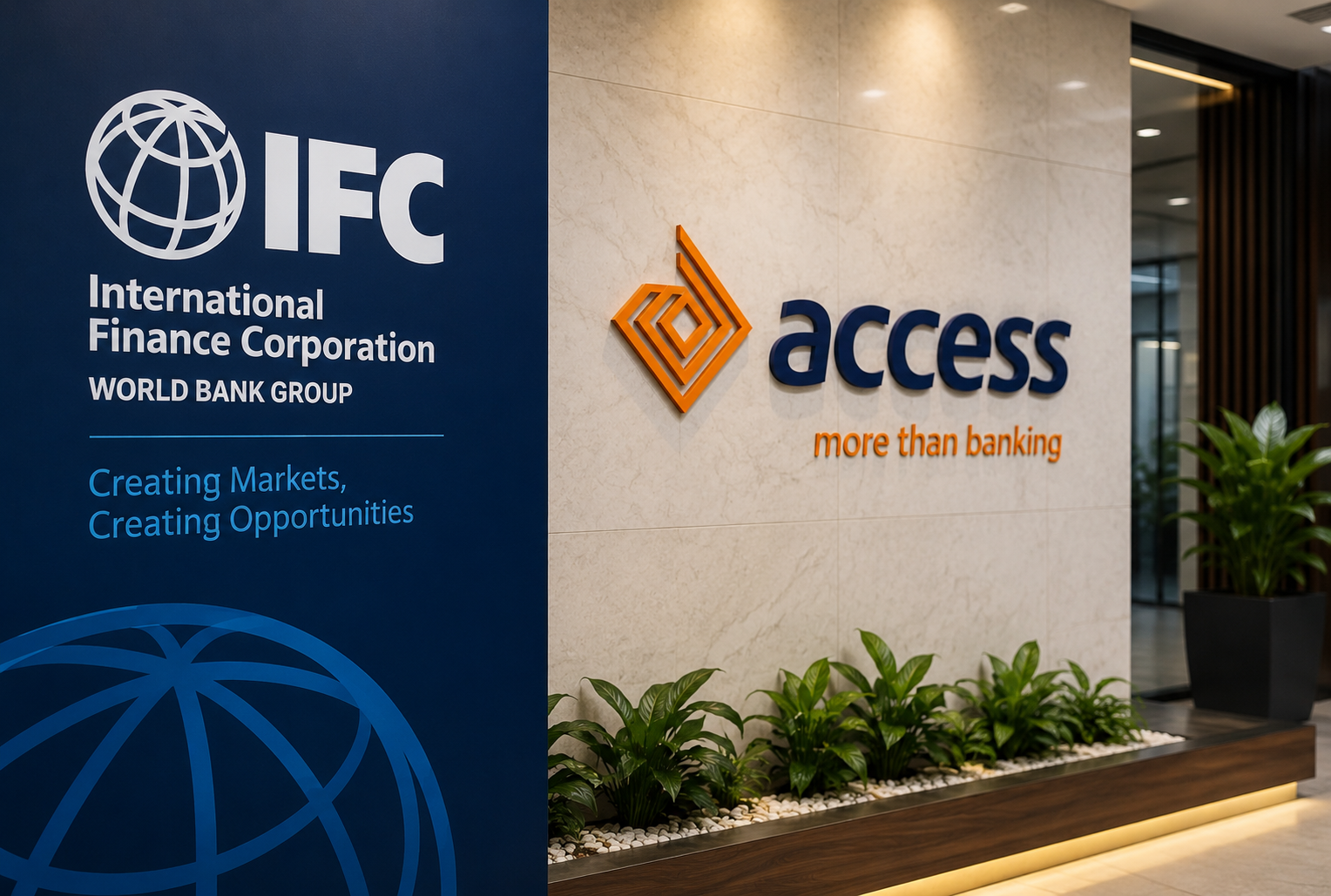

A new $500 million local currency financing framework between the International Finance Corporation and Access Bank marks a significant expansion of development-backed credit support aimed at strengthening corporate lending capacity across Africa’s fast-growing but underfunded private sector.
The facility, structured to provide local currency funding, is designed to reduce one of the most persistent constraints facing African businesses: foreign exchange risk. By enabling lending in domestic currencies, the framework is expected to shield borrowers from volatility in global FX markets while improving long-term access to credit for small and mid-sized enterprises.
For Nigeria’s banking sector, the deal underscores a broader shift toward blended finance models, where multilateral institutions and commercial lenders collaborate to de-risk lending and unlock capital for real-economy growth. Analysts say such structures have become increasingly important as higher global interest rates and currency pressures tighten funding conditions across emerging markets.
The partnership also reflects the International Finance Corporation’s continued strategy of scaling local currency operations to deepen financial inclusion and support private sector resilience. For Access Bank, one of Africa’s largest commercial lenders by assets, the framework strengthens its ability to expand SME and corporate loan books without excessive exposure to foreign exchange mismatches.
Market observers note that demand for local currency credit remains structurally high across sectors such as manufacturing, agriculture, and infrastructure, where businesses often struggle to secure long-tenor financing on sustainable terms. The new facility is expected to partially address this gap, though execution will depend on currency liquidity and macroeconomic stability in participating markets.
Beyond Nigeria, the framework is expected to have spillover effects across selected African markets where Access Bank operates, reinforcing regional trade finance flows and cross-border investment activity. It also signals growing confidence among development finance institutions in the scalability of African banking partners.
However, risks remain. Currency depreciation pressures, regulatory uncertainty, and uneven monetary policy environments could affect the efficiency of local currency lending programs. Still, proponents argue that such frameworks are essential for building more resilient financial systems less dependent on dollar-denominated borrowing.
As African economies continue to grapple with capital constraints, the IFC–Access Bank collaboration highlights the increasing role of structured development finance in bridging funding gaps and supporting private sector expansion.