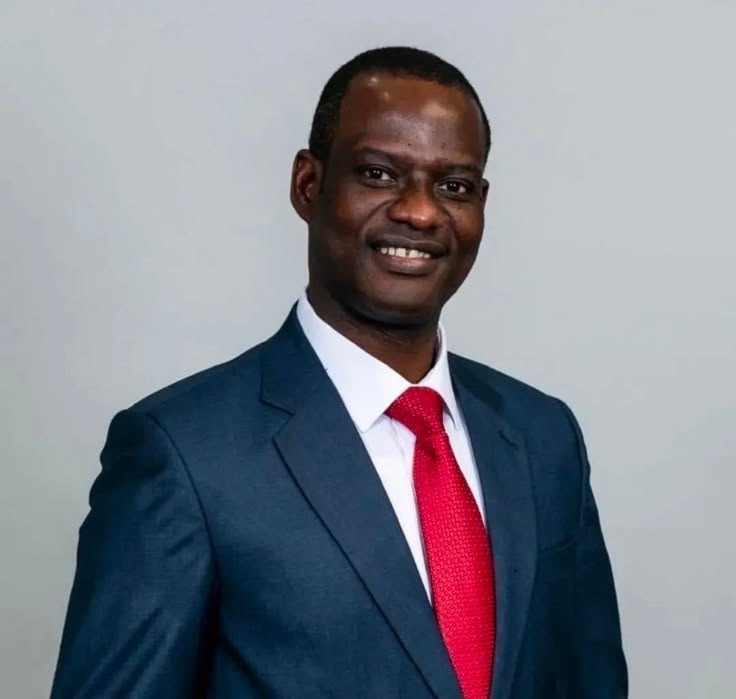

Nigeria’s Minister of Finance and Coordinating Minister of the Economy, Taiwo Oyedele, has warned that the country cannot continue to rely on borrowing to fund development, stressing the need for a stronger and more sustainable revenue system driven by domestic resources.
He made the statement in Abuja while speaking at the 28th Annual Tax Conference of the Chartered Institute of Taxation of Nigeria (CITN), themed “Tax Reforms and Global Relevance: Positioning Nigeria’s Tax System for a Sustainable Future.”
According to Oyedele, Nigeria must urgently strengthen its fiscal framework in order to sustainably finance critical national needs such as infrastructure, education, healthcare, security, and social welfare. He emphasized that continuous borrowing is not a viable long-term strategy for economic stability.
He stated that the country must build a tax and revenue system capable of supporting national development without excessive dependence on loans.
His warning comes at a time when Nigeria’s debt profile has continued to rise. Data from the Debt Management Office (DMO) shows that the nation’s total public debt reached N159.28 trillion as of December 31, 2025, representing about $111 billion at the official exchange rate.
This marks an increase of N14.61 trillion compared to the N144.67 trillion recorded in 2024, showing a 10.1 per cent year-on-year rise.
When President Bola Tinubu assumed office in May 2023, Nigeria’s debt stood at N87.38 trillion. Since then, the figure has increased by about N71.82 trillion, meaning nearly half of the current debt stock accumulated under the present administration.
Domestic debt accounts for the larger share at N84.85 trillion, while external debt stands at N74.43 trillion. The federal government alone is responsible for N80.49 trillion in domestic debt and N66.27 trillion in external obligations.
Analysts have raised concerns over the sustainability of this trend, especially as the government is projecting N17.89 trillion in new borrowing for 2026 and seeking additional external financing approvals.
Fiscal experts warn that debt servicing has already become a major burden, with reports indicating that it consumes more than the government’s retained revenue, leaving little fiscal space for development spending.
Against this backdrop, Oyedele said Nigeria’s ongoing tax reform agenda is designed to reposition the country’s fiscal system for long-term stability. He described the reforms as a strategic effort to create a tax structure that is efficient, fair, and globally competitive.
He highlighted major challenges in the current system, including multiple taxation, weak compliance, fragmented administration, and the large size of the informal sector.
The minister also pointed to reforms already underway, such as tax exemptions for minimum-wage earners, reduced burdens for low- and middle-income groups, and planned improvements to the value-added tax system.
He noted that several states have begun adopting tax harmonisation laws and urged others to follow in order to improve coordination and reduce inefficiencies.
Oyedele further emphasized the role of digital systems in improving tax administration, including automation platforms and data-driven compliance tools aimed at reducing human interference and increasing transparency.
He also reaffirmed government commitment to taxpayer protection through stronger dispute resolution systems and the establishment of a Tax Ombud office.
He concluded that a strong tax system is not only about revenue collection but also about supporting investment, encouraging business growth, and strengthening national development.