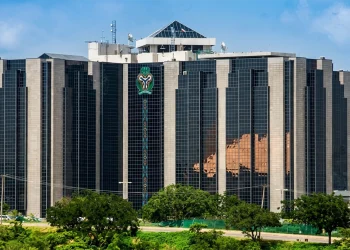
The Central Bank of Nigeria has warned state governments across the country to reduce their dependence on overdrafts and short-term loans, saying poor fiscal management at the state level could threaten Nigeria’s new inflation-targeting policy framework.
The warning was made during a meeting between the apex bank and state government officials organised through the Nigerian Governors’ Forum Secretariat in Abuja.
Speaking during the engagement, the Deputy Governor in charge of Economic Policy at the CBN, Dr Muhammad Abdullahi, urged state governments to adopt stronger fiscal discipline to help stabilise prices and support the country’s ongoing economic reforms.
According to him, states must cut back on heavy borrowing, especially short-term loans and overdrafts, while ensuring that all borrowing decisions remain within sustainable debt limits. He also advised states to improve their budgeting processes, make realistic revenue projections, prioritise spending, and align their financial calendars with current economic realities.
Abdullahi explained that Nigeria’s move toward inflation targeting represents a more transparent and forward-looking monetary policy system. He said the framework can only succeed if both the federal and state governments work together responsibly.
He stressed that while the CBN controls monetary policy, the financial decisions made by state governments also play a major role in determining inflation levels in the country.
According to him, inflation targeting depends heavily on managing public and investor expectations. Therefore, reckless spending and uncontrolled borrowing by states could weaken the impact of the CBN’s policies.
The deputy governor noted that state governments influence inflation through their spending habits, debt accumulation, salary payments, contractor financing, wage bills, and management of funds received from the Federation Account Allocation Committee.
He warned that unpredictable or excessive spending by states could increase inflationary pressure and disrupt price stability.
Abdullahi also explained that inflation targeting works best when governments do not pressure the central bank to finance deficits. He said this principle applies not only to the federal government but also to state governments.
To support the inflation-targeting framework, he outlined four major responsibilities expected from states. These include maintaining fiscal discipline, borrowing responsibly, improving debt and cash management coordination, and strengthening internally generated revenue.
He further cautioned against excessive supplementary budgets, unplanned spending, and rising debt levels, saying such actions could create liquidity shocks and worsen inflation.
Also speaking at the event, the Director of the Monetary Policy Department at the CBN, Dr Victor Oboh, described inflation targeting as a beneficial framework for households, businesses, and governments because it improves policy credibility and reduces economic uncertainty.
Oboh added that price stability cannot be achieved through monetary policy alone, especially in a federal system where states’ financial decisions directly affect inflation and liquidity.
Meanwhile, the Executive Director of Policy, Strategy and Research at the Nigerian Governors’ Forum, Prof Olalekan Yunusa, praised the CBN for involving state governments early in the reform process.
The meeting was attended by officials from more than 20 states, including commissioners of finance, accountants-general, permanent secretaries, statisticians, and economic planners, who all expressed support for the CBN’s reform agenda.
The warning comes as Nigeria’s subnational debt continues to rise. Recent figures from the Debt Management Office showed that the combined external debt of the 36 states and the Federal Capital Territory increased from $4.80bn in 2024 to $5.68bn in 2025, representing an 18.43 per cent increase within one year.