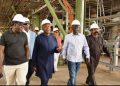

Nigeria’s largest telecommunications operators, including MTN Nigeria, Airtel Nigeria, and Globacom, could face regulatory sanctions if they fail to address persistent network disruptions affecting millions of subscribers across the country, according to Nigeria’s Minister of Communications, Innovation and Digital Economy, Bosun Tijani.
The warning comes amid growing consumer frustration over dropped calls, delayed text messages, unstable internet connectivity, and poor service quality that have increasingly disrupted businesses and everyday communication in Africa’s most populous nation.
Speaking on the deteriorating state of telecom services, Tijani said operators must significantly improve network reliability and customer experience or risk penalties from regulators. The minister stressed that the government expects telecom companies to match rising demand for digital services with sustained infrastructure investments.
Nigeria’s telecom sector has become a critical pillar of the economy, supporting financial technology platforms, digital commerce, remote work, and mobile banking. However, rapid growth in data consumption, rising operating costs, foreign exchange pressures, and infrastructure vandalism have intensified pressure on operators’ networks.
Industry analysts say the warning reflects mounting concerns within government over the economic implications of weak telecom infrastructure. Frequent network outages have affected payment systems, business operations, and digital transactions, particularly as Nigeria pushes for broader financial inclusion and a more technology-driven economy.
Telecom operators have repeatedly cited challenges including soaring diesel prices, unstable electricity supply, multiple taxation, and currency depreciation, which have significantly increased operational costs. Many base stations across the country rely heavily on diesel-powered generators due to unreliable grid electricity, raising maintenance expenses.
Despite these pressures, regulators are under increasing public pressure to enforce stricter service standards. Consumers and businesses have complained that service quality has failed to improve proportionately with rising data usage and subscriber growth.
The Nigerian Communications Commission, the sector’s regulator, has in recent years introduced quality-of-service benchmarks aimed at improving network performance. Analysts believe tougher enforcement measures could now follow if operators fail to deliver measurable improvements.
The federal government’s tougher stance also signals broader ambitions to strengthen Nigeria’s digital economy agenda. Tijani has consistently positioned reliable connectivity as essential to attracting investment, expanding innovation, and supporting economic diversification away from oil dependence.
Market observers say any major sanctions against telecom operators could increase pressure on company earnings in the short term, particularly as firms continue to navigate inflation, naira volatility, and capital expenditure demands. However, stronger network performance could ultimately boost consumer confidence and accelerate digital adoption across key sectors of the economy.
For millions of Nigerian users, the immediate concern remains straightforward: more reliable calls, faster internet speeds, and fewer disruptions in an increasingly connected economy.