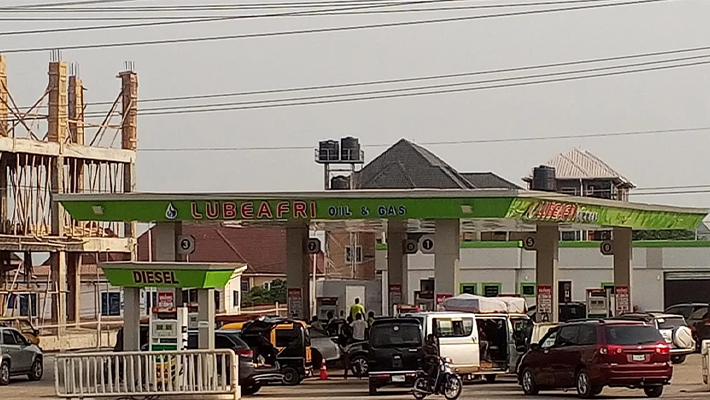

The average retail price of Premium Motor Spirit (petrol) in Nigeria rose by 22.55 per cent in March 2026, climbing from ₦1,051.47 in February to ₦1,288.54, according to the latest report from the National Bureau of Statistics (NBS). On a year‑on‑year basis, the price increased by 2.13 per cent from ₦1,261.65 recorded in March 2025.
State‑level analysis showed significant regional disparities. Anambra recorded the highest average retail price at ₦1,441.22 per litre, followed by Sokoto at ₦1,377.55 and Borno at ₦1,375.16. Conversely, Lagos, Ogun and Kaduna recorded the lowest prices at ₦1,162.71, ₦1,169.78 and ₦1,193.40 respectively. On a zonal basis, the North‑East recorded the highest average at ₦1,336.50, while the South‑West recorded the lowest at ₦1,232.46.
The NBS also reported sharp increases in diesel and cooking gas prices. Automotive Gas Oil (diesel) rose 3.05 per cent year‑on‑year to ₦1,648.08 per litre in March, and 16.05 per cent month‑on‑month from ₦1,420.17 in February. Ebonyi State recorded the highest diesel price at ₦2,262.29, while Kogi had the lowest at ₦1,383.40. The price of refilling a 5kg cylinder of Liquefied Petroleum Gas (cooking gas) jumped by 12.60 per cent month‑on‑month to ₦7,655.73 in March from ₦6,799.18 in February.
The surge in petrol and diesel prices has direct and immediate implications for the broader economy. Transport operators pass higher fuel costs to commuters, while manufacturers face increased logistics expenses that feed into the final prices of goods. The NBS data suggests that the pass‑through effect is already visible in the March inflation figures, which recorded a sharp monthly acceleration. With petrol now significantly more expensive in the North‑East than in the South‑West, regional disparities in the cost of living are likely to widen further, potentially affecting internal trade flows and household welfare.