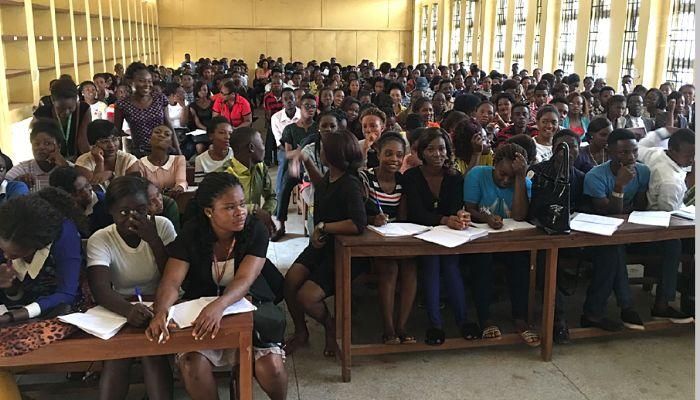

In the quiet corners of lecture halls and the bustling walkways of Nigerian campuses, a quiet but powerful shift is taking place. Between lectures, assignments, and examinations, many students are also running businesses just to stay afloat. From thrift clothing lines and food vending to pastries, digital services, and online reselling, student entrepreneurship has become a defining feature of campus life. What was once a straightforward academic journey focused mainly on grades has now evolved into a survival-driven dual responsibility.
This change is not accidental. It reflects deeper economic realities, rising living costs, reduced financial support from home, and the increasing pressure on young people to become self-reliant even before graduation. A recent survey conducted by Business Times Ng among students across tertiary institutions further revealed that a significant number of undergraduates now run one form of business or the other to support themselves financially, with survival being the dominant motivation rather than passion alone.
In earlier decades, tertiary education in Nigeria was largely structured around a clear expectation: students depended on parents or scholarships, focused on academics, and aimed for strong results that would lead to formal employment after graduation. Running a business while in school was rare and often unnecessary.
Today, that reality has changed. Many students now say parental support is no longer sufficient to cover basic needs such as feeding, accommodation, transportation, and academic materials. This financial gap has turned entrepreneurship into a necessity rather than a choice.
For Adebayo Karimot Olaitan, a 400-level student at the University of Lagos and founder of Beauty_essentials.ng, the turning point came from hardship. “What pushed me to start my business was survival,” she said. She recalled that during her 200 level first semester, “things dey hard,” and that moment forced her to rethink depending solely on home support. “I used my hostel fee to start my business and squatted with a friend,” she explained, describing the sacrifice behind her journey.
For Lawal Taiwo Kausara, a 300-level student at the University of Lagos and founder of TK Pastries, the realization came when financial support became unreliable. “When school bills was too much and my parents were not responding,” she said, was the moment she knew she had to start something of her own. In fact, she even used her food money as startup capital. However, she faced early resistance in convincing customers about the value of her products. “I had challenges in convincing people that my product was worth the price,” she added.
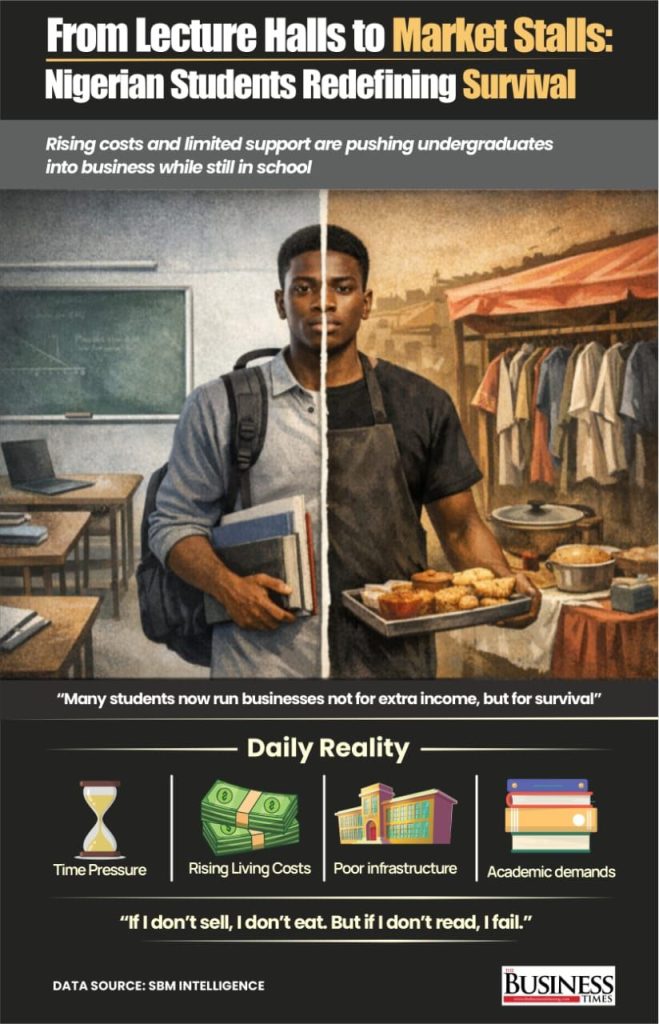
Jeremiah Titilayo of Adekunle Ajasin University, founder of Pauphat ipapanu hub and Anointed bakery, also shared a similar experience. She described independence as her motivation. “I realized I needed to pay for something urgent in school and I couldn’t contact my mom due to network glitch,” she said. That experience exposed how fragile financial dependence could be. She also pointed to challenges such as customers buying on credit and not repaying, forcing her to introduce stricter business policies. Her daily routine, she admitted, can be exhausting, “that you feel like duplicating yourself.”
At Ekiti State University, Adetayo Ibukunoluwa Adekemi, a 400-level student and founder of Hybeekay Thrift wears, also started her business out of survival. “Survival made me start a business while schooling,” she said. Her breaking point came when she needed both handouts and food supplies. After calling home, she was told to “manage,” which forced her to rethink her situation. “I was like manage what exactly? Then it dawned on me the need to look for means of keeping soul and body together,” she explained.
She started her business with a cash gift from an uncle but noted that challenges soon followed, especially issues with credit sales and delayed payments from buyers. Still, she structured her business around her academic life. “I ensure I get my goods while school is on break or weekends and sales is not everyday, so I shuffle between the two so well,” she said. Interestingly, she added that her business has not affected her academic performance. Instead, it has helped improve her communication and marketing skills, even though she sometimes experiences stress and fatigue from early efforts to promote her brand.
Across these stories, a pattern emerges. Student entrepreneurship today is shaped less by passion alone and more by economic necessity. A recent Business Times survey supports this, showing that many students now engage in business primarily to survive rising living costs and reduced financial support from home.
This trend also reflects a broader national reality. Reports on Nigerian undergraduates show that a growing number now engage in small businesses to support themselves financially and reduce dependence on family income. At the same time, entrepreneurship education in tertiary institutions is increasingly designed to shift students from a “job-seeking mindset” to a “job-creating mindset,” reflecting economic realities where formal employment opportunities are limited.
Despite the pressure, student entrepreneurship is reshaping how young people approach education. Many now balance academic work with business activities that include food vending, thrift sales, pastries, digital services, and online commerce through platforms like WhatsApp and Instagram. While this dual responsibility can be exhausting, it is also building resilience, communication skills, and financial independence among students.
Ultimately, what is unfolding on Nigerian campuses is more than just a trend. It is a reflection of an economy that is pushing students to become self-reliant earlier than previous generations. The modern student is no longer just a learner in a classroom but also a worker, a planner, and an entrepreneur navigating survival alongside education.