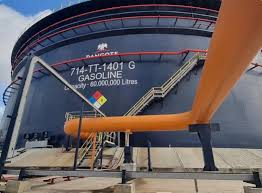

Nigeria’s downstream petroleum sector recorded a significant shift in consumption patterns during the first quarter of 2026, as total Premium Motor Spirit (petrol) usage hit 4.93 billion litres. While this represents a 7.4% year-on-year increase from the 4.59 billion litres recorded in the first quarter of 2025, a month-by-month analysis reveals a stark cooling of demand. Average daily consumption fell steadily from 60.2 million litres in January to 47.3 million litres by March, underscoring a mounting sensitivity to high retail prices in a fully deregulated market.
The economic implications of this 21.4% cumulative decline within the quarter are profound. The initial surge in January, where consumption rose 16.8% compared to the previous year, was driven by relative product availability and the traditional uptick in early-year economic activity. However, as the Dangote Refinery reportedly adjusted its petrol prices upward at least five times reaching N1,275 per litre in March the resulting inflationary pressure forced a drastic reduction in usage. This contraction suggests that the high cost of energy is now acting as a significant brake on domestic logistics and small business operations, potentially slowing GDP growth in fuel-dependent sectors.
The March data is particularly telling, marking a 7.1% year-on-year decline and serving as a possible inflection point for the Nigerian economy. As pump prices increasingly mirror international crude movements and exchange rate volatility, the “harsh economic realities” have forced transport operators and households to cut discretionary travel or seek alternatives like Compressed Natural Gas (CNG). This shift highlights a critical macroeconomic reality: while domestic refining capacity has improved supply stability, it has not insulated the public from price shocks. Consequently, the downstream market is witnessing a decoupling of supply sufficiency from affordability.
Looking ahead, the fiscal stability of the petroleum sector will depend on the balance between market-reflective pricing and the purchasing power of the Nigerian consumer. The sharp drop in March volumes indicates that the limits of price elasticity are being tested. For the Nigerian economy to maintain its productivity, policy interventions may need to focus on accelerating the transition to cheaper energy alternatives to mitigate the impact of elevated petrol costs on the national inflation rate and overall economic stability.