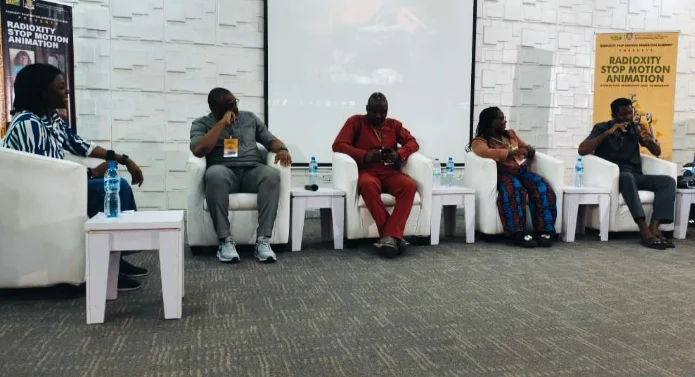

Yaba College of Technology has restated its focus on producing graduates who are practical, innovative, and ready for industry demands, with a growing emphasis on animation and creative technology.
The Rector, Ibraheem Abdul, made this known during a Stop Motion Animation Workshop held at the institution in Lagos. The programme was organised by the TETFund Centre of Excellence in Skills Entrepreneurship and Sustainable Development in partnership with Radioxity Media.
Stop motion animation, which combines artistic creativity with technical processes, continues to gain global relevance as a storytelling and communication tool. Abdul said the institution’s direction reflects a deliberate effort to move beyond classroom teaching toward shaping graduates who can drive innovation and economic value.
He explained that the workshop forms part of broader capacity building efforts aimed at equipping students with hands on, market relevant skills. According to him, the initiative also highlights the institution’s use of TETFund support to close the gap between academic theory and industry practice.
Abdul said: “In a bold declaration of its educational vision, YABATECH has reaffirmed its unwavering commitment to fostering a culture of innovation and excellence among its graduates.
“This initiative is not merely a statement but a comprehensive strategy aimed at equipping students with the skills and knowledge necessary to thrive in an ever-evolving global landscape.
“By integrating cutting-edge technology and contemporary teaching methodologies into its curriculum, YABATECH is dedicated to nurturing creative thinkers and problem solvers who can contribute meaningfully to various industries.
“The institution is actively collaborating with industry leaders to ensure that its programmes remain relevant and aligned with current market demands, thereby enhancing the employability of its graduates.
“Furthermore, YABATECH is investing in state-of-the-art facilities and resources that will empower students to engage in hands-on learning experiences, research projects and innovative initiatives.”
He added that the long term goal is to produce content with global appeal, similar to the growth seen in Nollywood, while expanding Nigeria’s creative output through animation.
The rector noted that as the global economy becomes more driven by digital creativity and visual communication, stop motion animation offers strong opportunities in media, advertising, education and entertainment. He stressed that the field blends technical expertise with imagination, making it valuable across multiple sectors.
According to him, “We gather to explore the fascinating world of stop-motion animation, a simple yet powerful form of storytelling that turns imagination into motion.
“Stop-motion animation teaches an important lesson: big things are created step by step. By moving objects slightly and capturing each moment, we make stories come alive.
“In many ways, this mirrors our academic and personal journeys. Progress may seem slow, but consistency produces remarkable results.”
Abdul encouraged participants to fully utilise the training to build competence in storytelling, animation and media production, noting that such skills can strengthen their portfolios and improve their relevance in Nigeria’s expanding creative economy.
In his remarks, the Centre Director, Sheriff-deen Ayodele-Oja, said the centre would continue to support specialised training aligned with national priorities. He explained that its mandate includes improving institutional capacity for quality training and applied research, while connecting academia with industry and policy.
Ayodele-Oja said: “We believe our students can seize opportunities for international exposure and the narration of our cultural strengths.
“In our effort to build capacity for excellence and encourage innovation and creativity, we will be holding a full-day stop-motion animation training on April 18.
“This is mainly targeting 120 shortlisted students. During the period, they will be exposed to professional stop-motion animation techniques using Radioxity stop-motion ball and socket armature kits.”
Also speaking, the Chief Executive Officer of Radioxity Media, Esther Gbadamosi, emphasised the importance of local storytelling. She noted that African narratives are often shaped externally, making it necessary for local creators to take control of their stories through technical skill and creative ownership.
Gbadamosi said top participants would receive professional start up kits, while others would benefit from a six week paid internship supported by the French Embassy and Access Bank.