

Before a single new well is drilled, Nigeria is turning to what it already has. Beneath its oil rich terrain lie dormant wells assets that were once productive but fell silent due to delays, costs, or regulatory bottlenecks. Now, the Federal Government is moving quickly to bring them back online, betting that speed and efficiency can unlock immediate gains in output, revenue, and investor confidence.
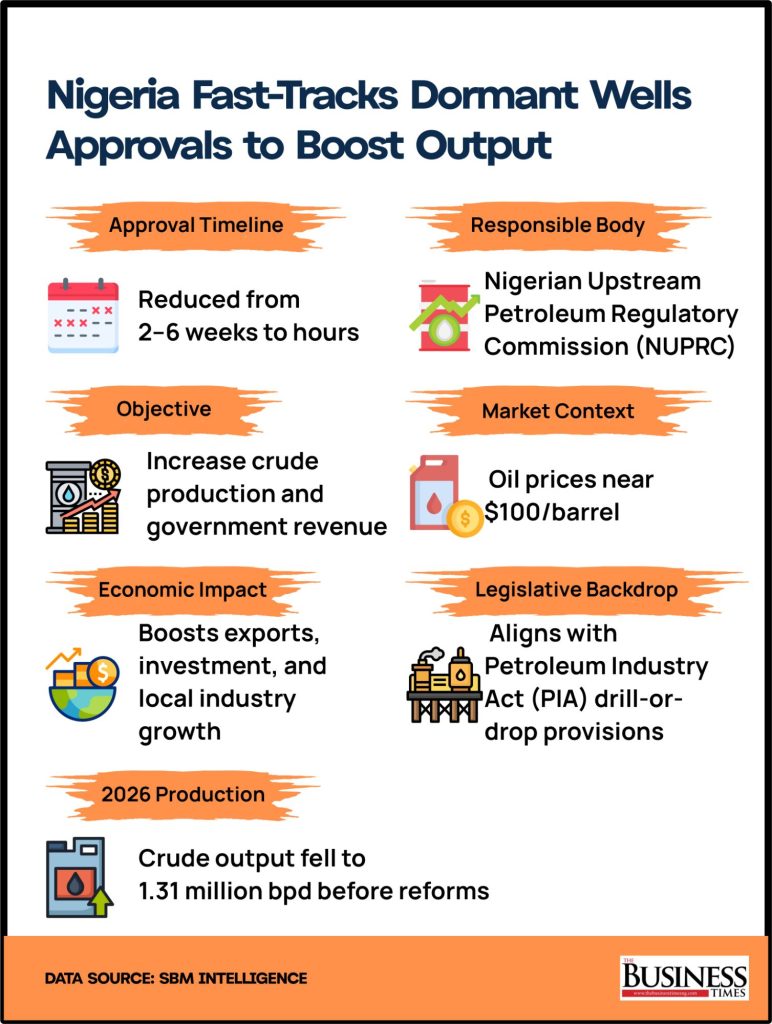
The decision to drastically reduce the approval timeframe for reactivating dormant oil wells marks a clear shift in policy direction. The Nigerian Upstream Petroleum Regulatory Commission (NUPRC), which oversees the nation’s upstream oil sector, is driving the reform. Previously, operators waited between two to six weeks to secure permits. Under the new system, approvals can be granted within hours. This change removes a long standing bottleneck and signals a more responsive regulatory environment.
In the short term, the policy is expected to deliver a modest increase in crude oil production. As economist Dr Oluwatosin Adesina explains, the advantage lies in the nature of these assets. They are already partially developed, which means production can resume faster than starting new drilling projects. However, he notes that the scale of output growth will depend on how many of these wells are commercially viable and how quickly operators can mobilise resources to restart production.
The economic implications are immediate and practical. Higher crude output translates directly into increased government revenue and stronger foreign exchange inflows from exports. At a time when Nigeria faces fiscal pressure and currency challenges, even a marginal rise in production could provide meaningful relief. The policy therefore serves as both a production strategy and a revenue stabilisation measure.
Beyond revenue, the reform aligns with the broader objectives of the Petroleum Industry Act (PIA), which seeks to modernise the sector and improve competitiveness. The “drill or drop” provision within the Act was designed to prevent companies from holding onto oil assets without developing them. By enforcing this rule alongside faster approvals, the government is pushing for active utilisation of resources. This improves efficiency in the upstream sector and helps attract more serious investors who are willing to commit capital and deliver results.
Still, the policy is not without constraints. Infrastructure remains a major concern. Limited pipeline networks, inadequate storage facilities, and logistical gaps could slow the pace of reactivation. Security challenges in oil producing regions also continue to pose risks, affecting both production and investor confidence. These structural issues may limit how much of the policy’s potential can be realised in practice.
From an investment perspective, the move sends a positive signal. Faster approvals indicate a willingness to reform and reduce bureaucratic friction, which has long discouraged investors. Dr Adesina points out that while this improves sentiment, it is only one factor in a broader decision making process. Fiscal terms, security conditions, and global oil prices still play critical roles. As such, the policy should be seen as part of a wider effort rather than a standalone solution.
There are also implications for employment and local industry growth. Increased upstream activity typically generates demand for services ranging from engineering to logistics. This creates opportunities for indigenous oil service companies and supports job creation across the value chain. Over time, this could contribute to building local capacity and strengthening the domestic oil industry.
The timing of the reform is strategic. With global oil markets experiencing uncertainty and supply disruptions in other regions, Nigeria has an opportunity to increase its presence in export markets. Reactivating dormant wells offers a quicker path to production compared to new exploration projects, which often take years to deliver results.
However, execution will determine success. Fast approvals alone are not enough. Operators must have the technical and financial capacity to act quickly, while the NUPRC must ensure consistent implementation and oversight in line with the PIA framework. Without this, the policy risks becoming another well intentioned reform with limited impact.
Overall, Nigeria’s decision to fast track dormant well approvals reflects a pragmatic approach to boosting oil production. It focuses on efficiency, leverages existing assets, and aligns with ongoing regulatory reforms under the NUPRC and the PIA. While challenges remain, the policy creates a pathway for immediate gains while setting the stage for longer term sector improvement.