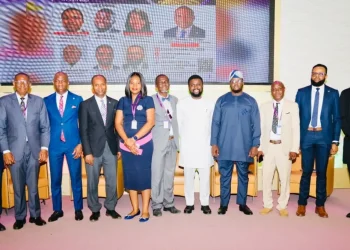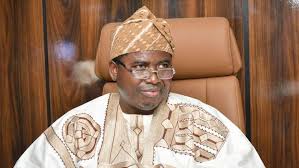

The Independent National Electoral Commission has directed all Resident Electoral Commissioners to step down all publicity and arrangements for the planned voter revalidation exercise, following intense opposition from political parties, civil society groups, and regional stakeholders who warned that the initiative could disenfranchise millions of Nigerians ahead of the 2027 general elections. A letter addressed to RECs, dated April 4, 2026, and signed by the commission’s Secretary, Rose Oriaran-Anthony, asked them to await further directives, adding that a scheduled meeting with RECs would now hold via Zoom.
The commission had announced a nationwide revalidation exercise aimed at sanitising the voter register by removing ineligible entries and strengthening the credibility of future elections. However, the timing of the proposal, less than ten months before the general election, triggered immediate backlash from opposition parties who viewed it as a potential tool for voter suppression. The African Democratic Congress alleged that the exercise would be a “recipe for chaos” that could disenfranchise millions of Nigerians. In a statement signed by National Publicity Secretary, Mallam Bolaji Abdullahi, the party argued that requiring already registered voters to revalidate their details so close to the polls would suppress turnout, deepen voter apathy, and unfairly exclude those unable to travel.
The faction of the Peoples Democratic Party led by Kabiru Tanimu Turaki described the timing of the planned exercise as “suspicious.” Its National Publicity Secretary, Ini Ememobong, told Daily Trust that the exercise was seen as an attempt to disenfranchise many Nigerians. “The question is, why now? Why wasn’t it done a year or two ago? This can be seen as an attempt to disenfranchise Nigerians,” he said.
A group identifying as Concerned Former Legislators raised the stakes further, alleging that the exercise was a “ploy to reduce North’s voting strength.” In a statement addressed to northern political and traditional institutions, the group wrote, “There is a growing and widespread perception across the North that this revalidation exercise is not merely administrative, but strategically timed and structured in a way that could significantly reduce the voting strength of the region ahead of the 2027 general elections.” The group called on northern leaders to rise above silence and act in defence of democratic fairness, proposing that if INEC insisted on revalidation, the exercise should be suspended until after the 2027 elections or conducted only when security conditions significantly improved.
Political scientists who spoke to Daily Trust cautioned against disenfranchising eligible voters. Dr Mohammed Alada of the University of Ilorin said voter revalidation was necessary to update the voters’ register in line with realities such as deaths, relocation of voters, and other demographic changes. However, he warned that the exercise must not be implemented in a way that becomes burdensome for citizens, cautioning against compressing the exercise into a very short timeframe that could create logistical challenges and reduce effective participation. An Associate Professor of Political Science at Al-Hikmah University, Ilorin, Sikiru Lanre Nurudeen, said electoral processes must prioritise inclusiveness and broad participation, warning against any framework that could exclude eligible voters.
Executive Director of Community Outreach for Development and Welfare Advocacy, Taiwo Otitolaye, said INEC should extend the timeline for voter revalidation, noting that continuous voter registration is conducted at local government headquarters, and in many places there are unmotorable roads leading to remote communities. Director of Media Advocacy and Technologies Centre, Musa Aliyu, described the exercise as a necessary step towards strengthening electoral integrity but warned that the short notice and limited duration raised serious concerns. “Allocating just three weeks for voter register revalidation in a country with over 90 million registered voters is grossly inadequate,” he said.
A former Director of Voter Education at INEC, Nick Dazang, explained the legal framework governing voter register updates. He cited Section 12(1)(e) of the Electoral Act, which states that a person shall be qualified to be registered as a voter if such a person is not subject to any legal incapacity to vote. He also referenced Section 19, which requires the commission to appoint a seven-day period for public scrutiny of the voter register not later than 90 days to a general election. Dazang noted that after harvesting registrations, the commission runs the Automated Biometric Identification Systems software for fingerprint and facial recognition to identify and remove multiple registrations.
The Director of Voter Education and Publicity at INEC, Victoria Eta-Messi, defended the commission’s intentions, stating that the exercise was designed to strengthen, not restrict, participation in the electoral process. “Far from it, please. The expected outcome of the exercise is to have a more credible register of voters,” she said.
From a democratic governance perspective, the suspension of the revalidation exercise represents a significant victory for civil society and opposition parties who mobilised against what they perceived as an administrative overreach with potential political consequences. The episode highlights the tension between electoral integrity and voter inclusion, a balance that electoral commissions worldwide struggle to strike. While cleaning the voter register of ineligible entries is a legitimate administrative goal, the timing, duration, and communication of such exercises matter enormously for public trust and political legitimacy.
The suspension also underscores the political sensitivity of electoral administration in Nigeria, where accusations of bias and manipulation are common. INEC’s decision to step back from a controversial proposal, rather than proceed despite opposition, may restore some confidence in the commission’s responsiveness to stakeholder concerns. However, the episode also raises questions about the commission’s internal decision-making processes and why a proposal with such obvious political implications was announced without prior consultation with political parties and civil society organisations.
As the 2027 election cycle progresses, the voter register will remain a contentious issue. INEC must now find a path forward that achieves its legitimate goal of register integrity without disenfranchising eligible voters. This may involve a longer timeline, more robust public education, and greater transparency about the methodology and outcomes of any verification exercise. The commission’s ability to navigate these challenges will affect not only the credibility of the 2027 elections but also public confidence in Nigeria’s democratic institutions more broadly.