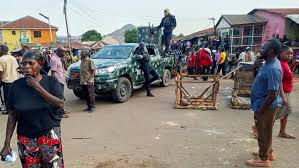

Tension gripped parts of Jos, the capital of Plateau State, on Wednesday as traders hurriedly shut down businesses and fled their shops after a sudden wave of panic with no clear cause, heightening anxiety in a community still reeling from recent violence. Witnesses described scenes of confusion, with people running in different directions, triggering fear among residents already shaken by the deadly attack in Angwan Rukuba on Palm Sunday.
Traders at Terminus market, one of the largest commercial hubs in the city, said they abandoned their shops immediately after seeing others flee, unsure of what was happening but fearing for their safety. The stampede-like scenes disrupted commercial activity across parts of the city, with businesses remaining closed for much of the day as residents stayed indoors awaiting clarification from security agencies.
The incident comes just days after at least 28 people were killed in Angwan Rukuba, an attack that prompted authorities to impose a 48-hour curfew across the affected area. The curfew was later relaxed to allow movement between 7 a.m. and 3 p.m., enabling residents to observe Ramadan and conduct essential activities. However, Wednesday’s panic has heightened fears of further unrest and possible reprisal attacks, raising concerns that the state government may review the eased restrictions.
Police authorities were unavailable for immediate comment on the cause of the panic or whether any arrests had been made. The absence of official communication has allowed speculation to spread, compounding the psychological impact on residents who have endured cycles of communal violence over the years.
The economic impact of recurring insecurity in Plateau State extends beyond immediate disruption. Jos serves as a commercial hub for north-central Nigeria, connecting agricultural producers to markets and hosting significant trade in food items, building materials, and manufactured goods. Each outbreak of violence disrupts supply chains, destroys inventory, and erodes the confidence that underpins investment and employment.
For the state government, the challenge is twofold: addressing the immediate security concerns that trigger panic while building the long-term trust and institutional capacity necessary for lasting stability. Governor Caleb Mutfwang’s administration has pledged justice for the Palm Sunday victims and support for affected families, but sustained calm will depend on effective policing, community engagement, and economic recovery.