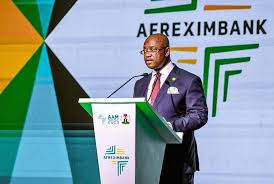

The African Export-Import Bank (Afreximbank) has raised $2 billion through a three-year dual-tranche syndicated loan, marking the largest deal of its kind in the bank’s history. The Cairo-based lender secured $1.73 billion and €228 million, exceeding its initial $1.5 billion target due to strong investor demand, signalling sustained confidence in the institution’s funding strategy and credit profile.
Proceeds from the facility will be used to refinance existing obligations and support general operations, providing the bank with liquidity to continue its mandate of financing African trade and development. The transaction attracted 31 lenders across Europe, the Middle East, Asia, and Africa, demonstrating the breadth of investor appetite for African multilateral instruments despite ongoing challenges in the global financial landscape.
Mashreqbank, MUFG Bank, and Standard Chartered acted as joint global coordinators and bookrunners for the transaction, underscoring the involvement of major international financial institutions in African trade finance. The successful fundraising comes amid ongoing debate over Afreximbank’s preferred creditor status, particularly regarding debt-distressed countries such as Ghana and Zambia, where the bank has significant exposures.
Earlier this year, Afreximbank cut ties with Fitch Ratings over concerns about the agency’s assessment methodology, a move that highlighted tensions between the bank and major credit rating agencies regarding the treatment of multilateral lenders in sovereign debt restructurings. Preferred creditor status, which prioritises repayment to multilateral institutions over bilateral or commercial creditors, remains a contentious issue in international finance discussions.
From a broader economic perspective, the successful syndicated loan demonstrates that African multilateral institutions can access international capital markets on competitive terms, even as individual countries face borrowing constraints. This capacity is particularly valuable for financing regional infrastructure, trade facilitation, and industrial development projects that individual countries might struggle to fund independently.
For Nigeria, as a major shareholder in Afreximbank and one of the continent’s largest economies, the bank’s continued access to international liquidity supports trade finance availability for Nigerian businesses. The facility will also enable Afreximbank to continue its role in supporting intra-African trade under the AfCFTA framework, potentially benefiting Nigerian exporters and importers.
The bank’s ability to exceed its fundraising target suggests that international lenders differentiate between the creditworthiness of African multilateral institutions and the sovereign ratings of individual member countries, a distinction that could facilitate additional financing for continental development priorities.