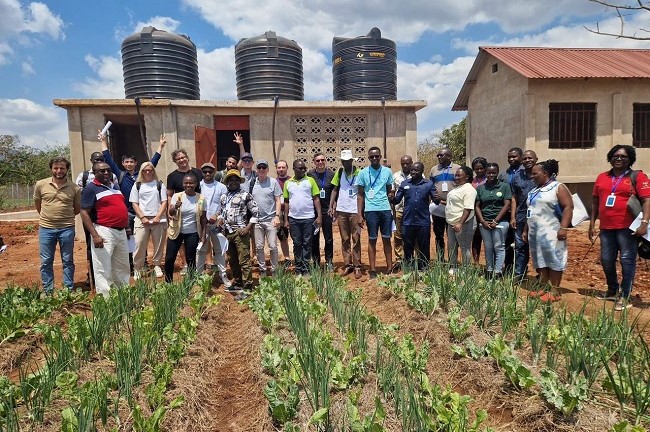

Nigeria and the European Union have partnered to deploy climate-smart technologies aimed at improving food systems and building resilience against the impacts of climate change on agricultural productivity. The collaboration, announced during a recent engagement between Nigerian agricultural officials and EU representatives, focuses on introducing innovative farming techniques, precision agriculture tools, and sustainable land management practices designed to boost yields while reducing environmental degradation.
The partnership arrives at a critical moment for Nigeria’s agricultural sector, which faces mounting pressures from erratic rainfall patterns, desertification in the north, flooding in the south, and soil degradation across multiple regions. These climate-related challenges have contributed to production volatility, driving food price inflation and undermining efforts to achieve national food security. Climate-smart agriculture—which integrates technological innovation with traditional knowledge to enhance productivity, adapt to changing conditions, and reduce greenhouse gas emissions—offers a pathway to stabilizing output in the face of environmental uncertainty.
The EU’s engagement in Nigeria’s agricultural transformation reflects a broader strategic interest in supporting food systems across Africa, where climate vulnerabilities intersect with demographic growth and rising food demand. For Nigeria, the partnership provides access to technical expertise, funding mechanisms, and technology transfer that can accelerate the adoption of practices already proven effective in other regions. Key areas of focus include drought-resistant crop varieties, efficient irrigation systems, agroforestry techniques, and digital tools for weather monitoring and farm management.
From an economic perspective, climate-smart agriculture addresses both productivity and risk management. Farmers who adopt improved practices can achieve higher yields and more predictable harvests, stabilizing their incomes and reducing vulnerability to climate shocks. For the broader economy, a more resilient agricultural sector reduces the need for food imports, preserves foreign exchange reserves, and supports the livelihoods of the estimated 35 million Nigerians engaged in farming. The technology transfer component also creates opportunities for local manufacturing and servicing of agricultural equipment, contributing to industrial development.
The partnership emphasizes knowledge sharing and capacity building, recognizing that technology adoption requires not only equipment but also training and institutional support. Extension services will play a critical role in disseminating climate-smart practices to smallholder farmers who constitute the majority of agricultural producers. Digital platforms for delivering advisory services, weather forecasts, and market information are expected to complement on-the-ground training, leveraging Nigeria’s growing telecommunications infrastructure to reach rural communities.
Food systems transformation is a central pillar of the partnership, reflecting an understanding that agricultural productivity alone is insufficient without corresponding improvements in storage, processing, distribution, and consumption. Climate-smart approaches extend beyond production to address post-harvest losses, which remain a significant drain on agricultural output. Cold storage facilities, efficient processing equipment, and improved transportation networks are all components of the integrated food systems approach that the EU-Nigeria collaboration seeks to advance.
The timing of the partnership aligns with Nigeria’s domestic agricultural policy priorities under the Renewed Hope agenda, which has identified food security as a core objective. The federal government has committed to expanding irrigation infrastructure, supporting mechanization, and improving access to high-quality inputs. The EU collaboration complements these efforts by bringing additional technical resources and international best practices to bear on Nigeria’s agricultural challenges.
For Nigeria’s smallholder farmers, the successful implementation of climate-smart technologies could transform the economics of farming. Improved resilience to climate shocks reduces the risk of crop failure, which in turn supports farmers’ ability to access credit and invest in their operations. Higher and more stable yields increase household incomes, enabling investments in education, health, and improved livelihoods that contribute to poverty reduction.
The partnership also carries implications for Nigeria’s international trade relationships. As global supply chains increasingly prioritize sustainability, agricultural products grown using climate-smart methods may command premium prices in export markets. The development of certification systems for climate-smart agriculture could open new opportunities for Nigerian farmers to access high-value markets in Europe and beyond.
Implementation challenges remain, including the need for sustained funding, coordination across multiple government agencies, and ensuring that benefits reach smallholder farmers rather than being captured by larger commercial operations. The partnership’s success will depend on effective monitoring and evaluation frameworks that track outcomes and allow for adaptive management as lessons emerge from implementation.