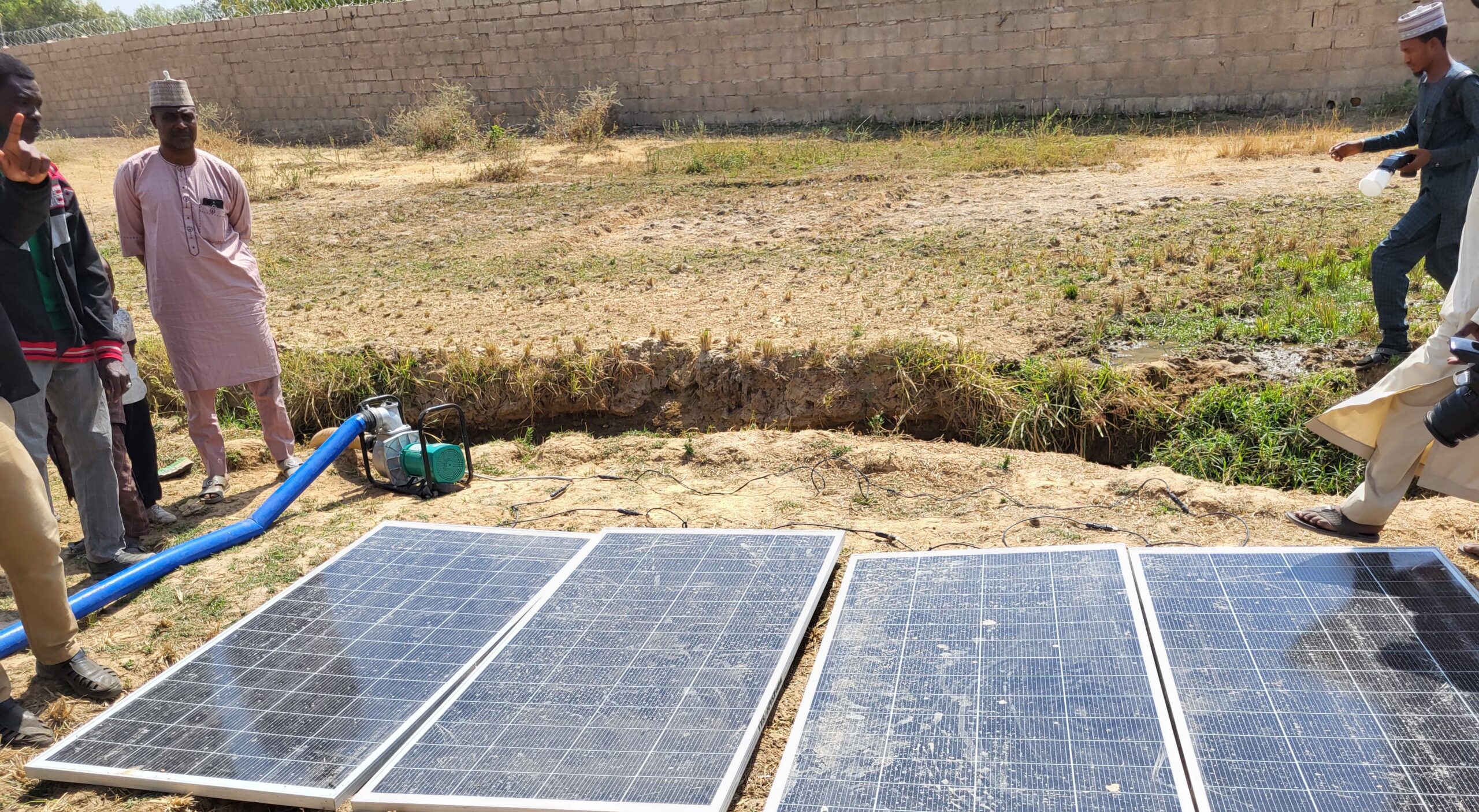

The federal government is advancing plans to deploy solar-powered irrigation systems across farming communities, a move aimed at reducing dependence on erratic rainfall and expanding cultivated land year-round. The initiative, which aligns with broader efforts to enhance food security and reduce agricultural import dependency, seeks to address a critical constraint in Nigeria’s farming sector: the limited access to reliable water for irrigation. By harnessing the country’s abundant solar resources, the programme offers a pathway to stabilising agricultural output, increasing farmer incomes, and reducing post-harvest losses associated with seasonal production cycles.
Solar-powered irrigation addresses multiple gaps in Nigeria’s agricultural value chain. Rainfall variability across the country’s ecological zones has long limited farmers to single cropping seasons, leaving land idle for months and constraining total output. Diesel-powered pumps, while effective, impose high fuel costs that erode profitability and expose farmers to price volatility. Solar solutions, by contrast, offer lower operating costs over time and align with Nigeria’s energy transition objectives. For smallholder farmers who constitute the majority of agricultural producers, access to affordable, reliable irrigation can double or triple annual cropping cycles, significantly increasing yields and household income.
From a macroeconomic perspective, the shift toward year-round farming has direct implications for food inflation and import bills. Nigeria remains a net importer of several agricultural commodities that could be produced domestically with adequate irrigation infrastructure. Wheat, rice, and sugar are among the products that require consistent water supply for profitable cultivation. By enabling farmers to cultivate during dry seasons, solar-powered irrigation supports import substitution efforts that conserve foreign exchange and strengthen the country’s balance of payments. Each hectare brought under irrigation represents reduced demand for imports and increased economic activity within the domestic agricultural sector.
The initiative also intersects with Nigeria’s energy access challenges. Many rural farming communities lack grid electricity, making off-grid solar solutions the most viable option for powering water pumps. The same infrastructure that supports irrigation can potentially serve other productive uses, including crop processing, cold storage, and household lighting. This multi-purpose potential enhances the economic case for investment, as fixed costs can be spread across multiple applications. For development partners and impact investors, integrated agricultural-energy projects offer opportunities to address climate resilience, food security, and energy access simultaneously.
The programme’s success will depend on several factors. First, the affordability of solar irrigation systems for smallholder farmers requires innovative financing mechanisms, including subsidies, lease-to-own arrangements, or cooperative ownership models. Second, access to spare parts and technical maintenance services in rural areas is essential to ensure systems remain operational beyond the initial installation. Third, water resource management must be carefully planned to prevent over-extraction and ensure sustainability of groundwater sources. The federal government’s engagement with state authorities, agricultural development programmes, and private sector partners will determine whether these challenges are adequately addressed.
For Nigeria’s agricultural sector, the shift toward solar-powered irrigation represents a departure from rain-fed subsistence farming toward climate-smart commercial agriculture. The technology aligns with the “Renewed Hope” agenda’s emphasis on food security and economic diversification, offering a practical pathway to increasing domestic food production while reducing reliance on imported fossil fuels. As climate patterns become less predictable, investments in irrigation infrastructure serve as a form of adaptation that protects farmers from weather-related crop failures and stabilises national food supply.
The exploration of solar-powered irrigation also signals a growing recognition within government that agricultural transformation requires integration with energy policy. Past efforts to boost agricultural productivity have often been undermined by the absence of reliable power for irrigation and processing. By linking solar energy deployment with agricultural development, the current initiative attempts to address both constraints simultaneously, creating conditions for sustained productivity gains.