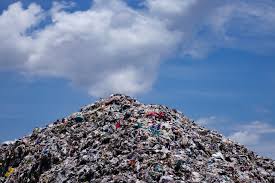

The persistent flooding across Lagos is primarily driven by systemic failures in plastic waste management rather than just rainfall, according to environmental sustainability expert Dr. Olufemi Idowu-Adegoke. In an interview with the News Agency of Nigeria (NAN) on Tuesday, March 24, 2026, Adegoke revealed that while Lagos generates over 13,000 tonnes of waste daily, the current recovery rate for plastics remains a dismal 3% to 6%, leaving the majority of non-biodegradable materials to choke the city’s drainage channels and lagoons.
The structural and economic consequence of the current “collect, transport, and dump” model is that only 40% of total waste is formally collected. Adegoke characterized the existing landfill system as a “recurring liability” with zero revenue potential, contrasting it with a circular economy where every recycled bottle represents one less flood trigger. He argued that capturing just 30% to 50% of plastic waste would drastically mitigate environmental degradation and extend the lifespan of overstretched dump sites.
Analytically, the impact on “Operational Efficiency and Logistics” remains the biggest hurdle for private recyclers. Logistics alone account for nearly 50% of operating costs in Lagos, exacerbated by irregular waste supply and high interest rates that stifle small and medium-scale enterprises. Adegoke noted that while the Lagos Waste Management Authority (LAWMA) has established a strong institutional framework since 1977, the lack of mandatory waste sorting at the source and weak policy enforcement continue to limit large-scale impact.
The impact on “The Green Workforce and Informal Sector” is a critical component of the proposed transition. Adegoke described informal waste pickers as the “backbone of recycling” and urged the state to formalize this group through registration, licensing, and social protection. Rather than building an entirely new system, he advised the government to empower the existing workforce by creating dedicated recycling zones and providing economic incentives such as tax credits for recycled materials and import duty waivers on processing equipment.
Furthermore, the expert advocated for the digitization of the waste ecosystem to track material flows and carbon savings, effectively integrating Lagos into global climate finance through carbon credit systems. He stressed that the state must shift from a “pay-to-dump” model to a “value recovery” system, making recycling more profitable than dumping through deposit return schemes and expanded producer responsibility.
The long-term outlook for Lagos hinges on a “recycling-first” approach that decentralizes infrastructure across communities. Adegoke warned that with a rising population and increasing consumption, the city is approaching a tipping point. For the state government, the path forward involves moving beyond initial capital outlays to focus on the life-cycle benefits of material recovery, ensuring that waste is treated as a high-value resource capable of driving both urban resilience and economic growth.