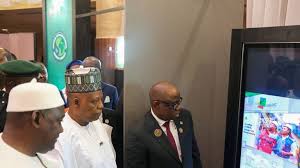




Vice President Kashim Shettima has officially unveiled the South East Vision 2050 and the South East Business Investment Company (SEBIC), marking a strategic shift toward long-term sub-national economic planning in Nigeria. Speaking at the South East Governors’ Forum summit, the Vice President emphasized that this unified development framework is designed to transform the region into a self-sustaining industrial powerhouse over the next quarter-century. For the Nigerian economy, the creation of an investment vehicle specifically for the Southeast is a critical structural intervention aimed at mobilizing private capital for large-scale infrastructure and industrial projects that have historically been underfunded.
The economic consequence of a coordinated 2050 vision for the Southeast lies in its potential to synchronize the industrial output of five states into a single, formidable economic bloc. By moving away from fragmented state-level planning, the region can better leverage its comparative advantages in manufacturing, trade, and technology. A unified investment company (SEBIC) acts as a de-risking mechanism for foreign and domestic investors, providing a centralized platform for Public-Private Partnerships (PPPs) in power generation, railway connectivity, and digital infrastructure. For a national economy seeking to diversify away from oil, the successful industrialization of the Southeast is a prerequisite for sustainable non-oil GDP growth.
Analytically, the “Vision 2050” framework addresses the critical “infrastructure gap” that has long constrained the region’s productivity. The Vice President highlighted that the Federal Government’s support for this regional initiative aligns with the “Renewed Hope Agenda,” which prioritizes job creation and economic stabilization through regional development. By focusing on a 25-year horizon, the Southeast is signaling a commitment to policy consistency a major factor in attracting foreign direct investment (FDI). If SEBIC can successfully attract capital into the region’s gas-to-power projects and industrial parks, it could lead to a significant reduction in the national headline inflation by lowering the production costs of locally manufactured goods.
Furthermore, the launch of an investment company specifically for the Southeast could serve as a blueprint for other geopolitical zones. In the context of Nigeria’s fiscal federalism, regional investment vehicles allow states to pool resources for capital-intensive projects that would be impossible for a single state to finance alone. This collaborative approach enhances the creditworthiness of regional projects, making them more attractive to multilateral lenders such as the African Development Bank (AfDB). The integration of the Southeast’s vibrant SME sector into this long-term vision is also essential, as it provides a pathway for informal businesses to scale up and enter the formal value chain.
The social and economic stability of the region is inextricably linked to the success of this 2050 vision. With the Southeast serving as a major hub for trade and entrepreneurship, the creation of a structured investment environment is the most effective tool for addressing youth unemployment and rural-urban migration. By fostering an “innovation-led” economy, the vision aims to transition the region from traditional commerce to high-value manufacturing and technology services. This shift is vital for improving the nation’s export profile and strengthening the Naira through increased earnings from non-oil exports.
The long-term outlook for the Nigerian economy will be significantly influenced by the implementation of these sub-national blueprints. While the unveiling of the vision and the investment company is a vital first step, the focus must now shift to execution and the creation of an enabling regulatory environment. The Federal Government’s role as an enabler, providing sovereign guarantees and policy support, will be the litmus test for the vision’s viability. As the Southeast moves toward this 2050 milestone, the synergy between regional ambition and national economic policy will be the defining factor in Nigeria’s quest for a trillion-dollar economy.