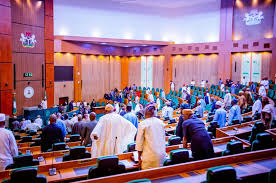

The Senate Committee on Appropriations has called for the total elimination of electricity subsidies, identifying the policy as a primary drain on the nation’s fiscal health. Speaking during a public hearing on the 2026 budget proposal, Committee Chairman Senator Adeola Olamilekan (Ogun West) argued that removing the subsidy is essential to free up trillions of naira for critical infrastructure and social programs. For the Nigerian economy, this move represents a definitive shift toward “cost-reflective” governance, aimed at reducing the federal government’s widening deficit and stabilizing the national treasury against global energy shocks.
The economic consequence of this proposal is the potential for a significant spike in the “cost of doing business.” For years, the federal government has cushioned consumers with trillions of naira in subsidies, but lawmakers now contend that this expenditure is no longer sustainable. If implemented, households and MSMEs will likely face a sharp increase in tariffs, which could drive up the cost of manufacturing and consumer services. However, from a fiscal perspective, the Senate argues that these “trillions of naira” in savings are necessary to fund the N25.91 trillion borrowing requirement of the 2026 budget, ultimately improving Nigeria’s debt-to-revenue ratio and sovereign credit rating.
Analytically, the push for subsidy removal aligns with the recent constitutional amendments that decentralized the power sector, allowing states to generate and distribute their own electricity. Senator Adeola stressed that with states now empowered to play a larger role, the federal government must “complete the unbundling” by exiting the subsidy regime. This transition is intended to attract private equity and foreign direct investment (FDI) into the power sector, as investors typically shy away from markets where pricing is artificially suppressed by government intervention.
The impact on “Macroeconomic Stability” is another vital dimension of this legislative push. The Senate defended the government’s plan to borrow nearly N26 trillion to bridge the budget deficit, noting that even advanced economies like the U.S. maintain high debt-to-revenue ratios. By removing electricity subsidies similar to the bold move on petrol subsidies—the government aims to prove to international lenders and Eurobond investors that it is committed to fiscal discipline. This “Budget of Consolidation” seeks to ensure that Nigeria does not default on its obligations from both present and past administrations, maintaining access to global financial instruments.
Furthermore, the Senate cautioned that for these reforms to be effective, they must be “embedded into people-oriented programmes.” Lawmakers acknowledged that simply removing the subsidy is not enough; the resulting revenue must be transparently managed to cushion the impact on the most vulnerable segments of society. For the Nigerian business environment, this move signals a “normalization” of the power market, where the reliability of the grid becomes more important than the cost of the unit, potentially ending the “generator-led economy” that currently drains corporate productivity.
The long-term economic outlook for Nigeria’s 2026 fiscal year hinges on the government’s ability to navigate the social backlash of tariff hikes while unlocking new revenue streams. As the Senate moves to bar “budget rollovers” and enforce strict implementation, the focus will remain on whether these savings actually materialize as tangible development. Successfully ending the electricity subsidy could be the final hurdle in Nigeria’s quest for a market-driven energy sector, providing the fiscal buffer required to achieve the nation’s ambitious trillion-dollar GDP goal.