


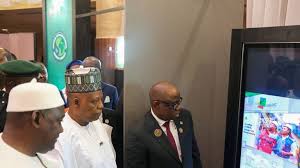

The Nigerian National Petroleum Company (NNPC) Limited has entered advanced negotiations with a major Chinese petrochemical firm to revive its long-dormant refineries, marking a significant departure from decades of failed contractor-led rehabilitation efforts. Speaking at the 2026 Nigeria International Energy Summit (NIES) in Abuja, NNPC Group Chief Executive Officer, Bayo Ojulari, revealed that the national oil company is seeking “skin-in-the-game” equity partners rather than traditional maintenance contractors. For the Nigerian economy, this strategic pivot represents a critical attempt to eliminate the multibillion-dollar fiscal drain of fuel imports and finally operationalize the country’s 445,000 barrels per day (bpd) refining capacity.
The economic consequence of this potential partnership is rooted in the urgent need for domestic energy security and foreign exchange conservation. Despite being Africa’s leading crude producer, Nigeria has historically spent a significant portion of its foreign reserves on importing refined petroleum products a practice that has exacerbated Naira volatility and fueled domestic inflation. By relinquishing minority equity to a partner with proven operational expertise, NNPC aims to transition its refineries from cost centers into self-financing, profitable assets. This move is expected to complement the output from the 650,000-bpd Dangote Refinery, potentially positioning Nigeria as a net exporter of refined products and a regional energy hub for West Africa.
Analytically, the decision to engage a Chinese firm described as an operator of one of China’s largest petrochemical complexes reflects a pragmatic shift toward technical competence over political patronage. An internal review conducted in 2025 revealed that the refineries were incurring massive losses due to high overheads and contractor dependencies despite producing near-zero output. The new “Equity-Operator” model ensures that the foreign partner bears financial and operational risks, incentivizing the delivery of international-standard refined products. Furthermore, Ojulari’s disclosure that the refineries may be redesigned as “hybrid plants” suggests a long-term vision to meet global product specifications, ensuring that Nigerian-refined fuel can compete on the international market rather than being restricted to domestic consumption.
From a fiscal standpoint, the success of these talks is vital for the government’s broader “Renewed Hope” economic agenda. The NNPC aims to mobilize up to $30 billion in financing by 2027 through such partnerships, reducing the burden on the federal budget. The “breathing space” currently provided by the Dangote Refinery has allowed the government to halt loss-making state operations temporarily to find sustainable solutions. If these negotiations materialize into a firm agreement by mid-2026, the resultant boost in local refining would provide a stable supply of petrochemical raw materials, stimulating growth in Nigeria’s manufacturing and fertilizer industries—two sectors essential for job creation and food security.
However, the path to refinery rehabilitation is fraught with historical skepticism. Over $25 billion has been spent on turnaround maintenance (TAM) over the past decade with negligible results, leading to public outcry and investigations into previous financial mismanagement. The current leadership’s emphasis on “commercial discipline” and “proven track records” is intended to restore investor confidence which was previously dampened by opacity. By partnering as a CAMA-regulated company rather than a government agency, NNPC is signaling a new era of corporate governance aimed at shielding the oil sector from political interference and ensuring that technical milestones are met without the delays that characterized previous regimes.
The long-term economic outlook for Nigeria hinges on the successful integration of its state-owned assets into the new deregulated downstream landscape. While the Dangote Refinery has broken the monopoly of imports, a functional state-owned refining sector would provide the competitive pressure necessary to stabilize domestic fuel prices and prevent private-sector monopolies. As the Chinese delegation prepares to inspect the facilities, the focus must remain on the transparency of the equity-sharing terms and the timeline for modernization. Reclaiming Nigeria’s refining sovereignty is not merely a matter of industrial pride but a fundamental economic imperative to reduce the cost of living and drive sustainable GDP growth across all sectors of the federation.


