


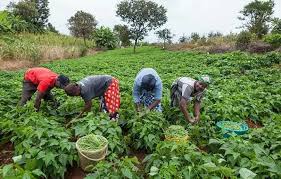

A critical disconnect has emerged between official economic data and the reality of Nigeria’s rural heartlands, as farmers across the country warn of a massive boycott of the upcoming planting season. Despite the National Bureau of Statistics (NBS) reporting a dip in headline inflation to 15.1% and food inflation hitting a decade-low of 8.89% in January 2026, producers claim they are being pushed into insolvency by a “scissors effect” of surging input costs and collapsing harvest prices.
The economic and structural consequence of this crisis is a looming threat to national food sovereignty. Mohammed Magaji, President of the All Farmers Association of Nigeria (AFAN), revealed that many farmers are choosing to “wait and buy” rather than plant, as the cost of production now far exceeds market returns. With a 50kg bag of NPK fertilizer reaching N80,000 while a bag of produce fetches as little as N23,000, large-scale producers are drastically scaling down operations Magaji himself noted a personal reduction from 70 hectares to potentially fewer than 20.
Analytically, the current dislocation in the agricultural sector is driven by several conflicting factors, most notably a recent surge in imports of staples like rice and maize. While these imports have crashed domestic commodity prices offering a short-term win for urban consumers the Centre for the Promotion of Private Enterprise (CPPE) warns they have created a long-term disaster for local investment. Additionally, a chronic lack of rural storage facilities and soaring transportation costs force farmers into “distress sales” to prevent produce from rotting, further driving down prices at the farm gate.
The impact on “Rural Stability and Investor Confidence” is a vital dimension of this developing story. Yunusa Enemali, National President of the National Apex of Cashew Farmers, dismissed the official narratives of declining inflation, noting that in rural villages, basic amenities like healthcare, electricity, and water remain non-existent. He warned that climate change is already affecting cashew yields, yet there is zero mitigation support for the smallholders who bear the brunt of both environmental and economic shifts.
The CPPE has called for an urgent, rules-based Farm Price Stabilisation and Farmer Income Protection Framework to prevent the total collapse of the sector. The organization argues that without a floor price to prevent harvest-time crashes, the current cycle of “cheap food” will inevitably lead to extreme scarcity as farmers abandon their fields. The consensus among agricultural leaders is that unless the government provides immediate subsidies for fertilizers and expands access to mechanization, the 2026 planting season may be one of the thinnest in recent history.
The long-term outlook for Nigeria’s food security depends on balancing the immediate needs of consumers with the survival of producers. While the federal government’s import measures have successfully curbed inflation in the short term, they may have inadvertently dismantled the incentives for domestic farming. For the “New Nigeria” agricultural agenda to succeed, the administration must now pivot from simply managing consumer prices to actively protecting the livelihoods of those who provide the nation’s breadbasket.


