

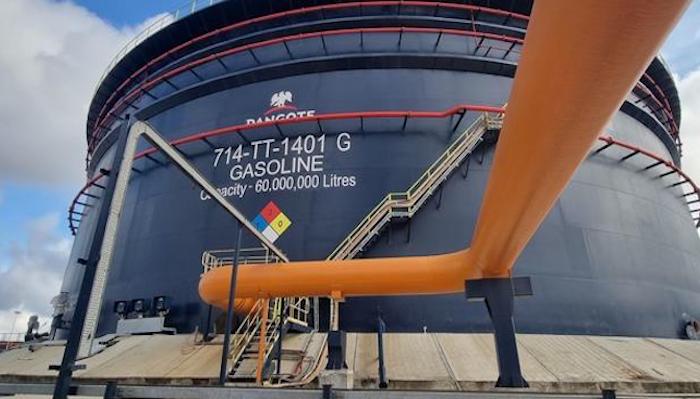
Dangote Petroleum Refinery is once again under the spotlight after the Petroleum and Natural Gas Senior Staff Association of Nigeria (PENGASSAN) directed its members to halt crude oil and gas supplies in protest over the dismissal of more than 800 workers. The union alleges that the refinery has replaced the laid-off staff with foreign nationals, a move it described as “anti-labour” and “against the national interest.”
The row marks the most serious confrontation yet between Africa’s largest refinery and organised labour since the facility began limited operations in 2023. PENGASSAN said its decision was necessary to resist what it called the “creeping marginalisation” of Nigerian workers in strategic national assets, accusing the Dangote management of “misinformation and propaganda” to mask unfair labour practices.
Dangote Industries, in its response, defended the layoffs, insisting they were part of a reorganisation aimed at improving safety standards and operational efficiency. The refinery further argued that hiring decisions were based on competence and global best practice, not nationality. It also warned that the union had no legal authority to interfere with its supply chain, framing PENGASSAN’s threat as “an illegal attempt to sabotage operations.”
The timing of the standoff has fuelled anxiety in the downstream sector. The 650,000-barrel-per-day facility, which is seen as a potential game-changer for Nigeria’s fuel security, has been struggling with crude supply constraints since its commissioning. The refinery has had to source feedstock from both Nigerian producers and international traders, with payment bottlenecks linked to foreign exchange shortages occasionally forcing it to scale back activity. In July, petrol sales were briefly suspended after the refinery could not secure enough crude, resuming only after intervention by the Nigerian Upstream Petroleum Regulatory Commission (NUPRC).
The latest crisis adds another layer of complexity. By threatening to choke off crude and gas flows, PENGASSAN is effectively targeting the refinery’s lifeline. Any prolonged disruption could derail the refinery’s ramp-up plans, delay its contribution to domestic supply, and undermine government efforts to reduce costly fuel imports.
Labour disputes are not new to large industrial projects in Nigeria, but the scale of this confrontation is unusual. Since the refinery’s early construction phase, unions have occasionally raised concerns about working conditions, expatriate dominance in technical roles, and alleged sidelining of Nigerian contractors. While many of these disputes were resolved quietly, PENGASSAN’s open directive suggests a hardening stance, reflecting broader frustrations within the oil and gas workforce over job security in a sluggish economy.
The Federal Government, acutely aware of the refinery’s strategic importance, has moved quickly to intervene. The Ministry of Labour has summoned both PENGASSAN and Dangote management to emergency talks scheduled for Monday. Officials hope to defuse the crisis before it escalates into a full-blown disruption of domestic supply. Government sources say the talks will cover not only the reinstatement of workers but also broader questions about local content, expatriate quotas, and industrial relations frameworks at the refinery.
For Dangote, the confrontation is the latest in a string of challenges that have dogged the refinery’s rollout. Apart from labour tensions and feedstock shortages, the company has faced scrutiny from competitors and regulators over pricing, foreign exchange transactions, and market dominance. Earlier this month, the refinery was forced to clarify its pricing policy after briefly halting petrol sales in naira, citing foreign exchange volatility. Following intervention by the Crude Technical Committee, sales in naira have since resumed, with the refinery urging marketers to place new orders for nationwide delivery.
The outcome of Monday’s talks will be crucial in shaping the refinery’s future trajectory. If a compromise is reached, the facility could stabilise operations and reassure both investors and consumers. But if the standoff drags on, it risks compounding Nigeria’s energy challenges, dampening investor confidence, and undermining the refinery’s role as a cornerstone of the country’s industrial policy.


