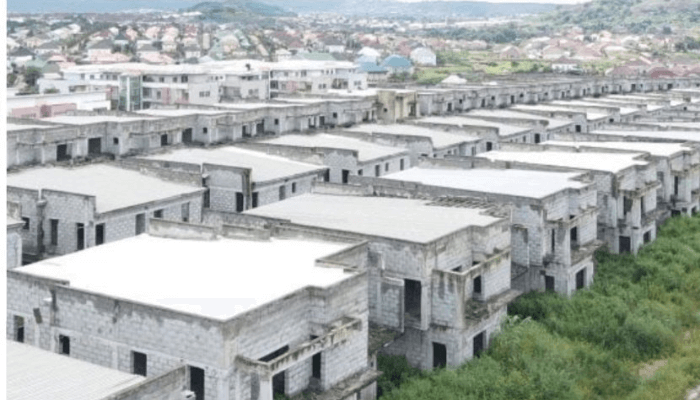

A comprehensive civic audit of Nigeria’s public project system has revealed deep structural flaws in capital budget execution, documenting 92 federally funded projects worth N15.07 billion that were fraudulently delivered under the Tinubu administration. The 2024/2025 report by Tracka, the citizen-led monitoring platform of BudgIT, which monitored 2,760 projects across 28 states, found that only 1,438 were completed, with 471 not executed at all and 99 abandoned. This data points to a systemic failure in converting budgetary allocations into tangible public goods, representing a severe drain on the national treasury and a direct impediment to economic growth and social welfare.
The report categorizes “fraudulent delivery” through several alarming patterns: the outright diversion of funds, relocation of projects to unintended locations, payment for work already executed in previous budget cycles, partial completion, and substandard execution. Geographically, the problem is concentrated, with Imo, Lagos, Kwara, Abia, and Ogun states accounting for 57.1% of all fraudulently delivered projects, involving N8.61 billion of the total sum. This concentration suggests not random failure but possible entrenched networks that exploit the project award and oversight process, diverting resources meant for national development into private or political channels.
Sectoral analysis reveals critical vulnerabilities in infrastructure vital for economic resilience. In response to repeated national grid collapses, Tracka assessed 16 dam projects across 13 states, valued at N432 million, which are essential for irrigation, flood control, and hydroelectric power. The audit found that none were completed; four were abandoned, six were progressing slowly, and six had not commenced despite evidence of funding. This failure in strategic energy and agricultural infrastructure perpetuates Nigeria’s vulnerability to climate shocks and power deficits, directly stifling productivity in agriculture and manufacturing.
The audit of primary healthcare centres (PHCs) paints a similarly grim picture for human capital development. Of 47 revitalised PHCs tracked across 25 states, only 26 showed visible improvements. Eight showed no sign of intervention despite being listed as revitalised, and one was completely abandoned. This gap between budgetary promise and on-ground reality forces citizens to travel long distances for care, reducing labour productivity and perpetuating a cycle of poor health outcomes that burden the economy. In the Niger Delta region, while 29 of 48 monitored projects were completed, 13 had not commenced and two were untraceable despite confirmed funding, highlighting ongoing challenges in a region crucial to national revenue.
Economically, the implications are multifaceted and severe. The N15.07 billion in identified fraudulent projects is just the quantifiable tip of a larger iceberg of waste, which includes hundreds of incomplete or uncommenced projects. This represents a catastrophic misallocation of scarce public capital, deepening the nation’s debt burden without generating the corresponding public assets needed to stimulate growth. Such leakage erodes the foundational trust necessary for a functional social contract, discouraging voluntary tax compliance and undermining the legitimacy of broader fiscal reforms. It also severely damages the investment climate, as international partners and domestic businesses perceive high execution risk and graft in public contracting.
Despite the stark findings, the report highlights 15 success stories where sustained citizen engagement directly drove project completion, from a revitalised PHC in Kano to erosion control in Rivers State. Joshua Osiyemi, Head of Tracka, argues this proves a viable path forward: “If just 5 per cent of Nigerians engage in oversight, monitoring could reach 50 per cent, significantly reducing opportunities for corruption and greatly improving service delivery.” This underscores that the solution is not merely increased budgeting but radically enhanced transparency and accountability in expenditure.
The Tracka report ultimately serves as a powerful diagnostic of a broken system. It moves the conversation beyond generic accusations of corruption to specific, data-driven evidence of failure in project delivery. For Nigeria’s economy to harness its full potential, translating budget lines into functional infrastructure is non-negotiable. Addressing this implementation crisis requires a technological and civic revolution in monitoring, stricter consequences for fraudulent contractors and complicit officials, and a governance culture that treats public funds as a sacred trust for development, not a political slush fund. The nation’s economic future depends on its ability to close this alarming gap between financial allocation and physical reality.