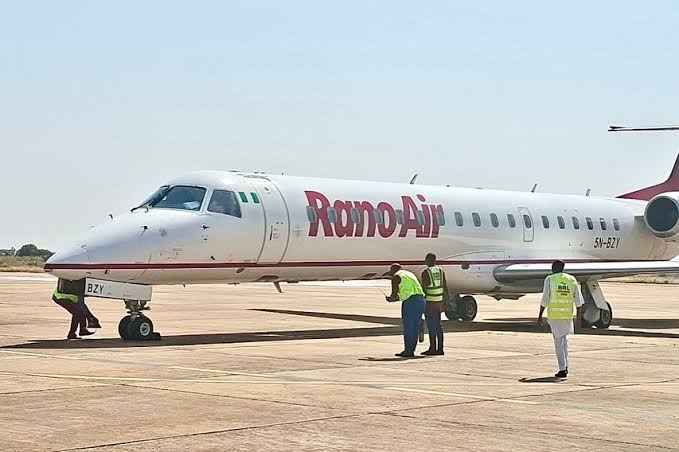

Rano Air has temporarily halted operations on several domestic routes, buckling under the weight of a relentless surge in Jet A1 aviation fuel prices. The carrier’s decision, announced recently, underscores mounting financial strain across Nigeria’s already fragile aviation sector, where fuel now accounts for up to 40% of operating expenses, up from roughly 25% two years ago.
Jet A1, the standard turbine engine fuel for commercial aircraft, has more than doubled in price since early 2023, tracking global crude volatility and exacerbated by Nigeria’s acute foreign-exchange shortages. Industry sources peg current local prices at approximately 1,300 naira (roughly $0.85) per litre, compared with 550 naira in mid-2022. For a round-trip flight from Lagos to Abuja on a Boeing 737, that adds nearly $3,000 in extra fuel costs per rotation.
“No airline can absorb such a shock without pulling levers, either raise fares, cut capacity, or suspend routes,” said a Lagos based aviation consultant, speaking on condition of anonymity. “Rano Air chose the latter for its thinner-demand corridors.”
The suspension, which affects flights to cities including Makurdi and Akure, highlights a stark reality for Nigeria’s secondary carriers. Unlike larger rivals such as Air Peace or Arik Air, smaller operators lack the fleet flexibility or hedging mechanisms to smooth out cost spikes. Passengers holding affected bookings, Rano Air said, would receive refunds or rebookings on its remaining network.
Market implications extend beyond the airline. Reduced route capacity on key regional links could push up fares on surviving operators by 15–20%, according to Bloomberg analysis. That, in turn, risks dampening domestic business travel and cargo movement just as the economy shows tentative signs of recovery.
Stakeholder reaction was swift. The Airline Operators of Nigeria (AON) reiterated its call for government intervention, including temporary tax waivers on imported Jet A1 and a concessionary exchange rate for fuel importers. The Central Bank of Nigeria, however, has yet to signal any policy shift. “Without structural fixes like local refining capacity, these disruptions will recur,” warned an AON spokesperson.
Looking ahead, Rano Air’s move may herald a broader retrenchment. Analysts at Reuters and CNBC note that three other regional carriers are now reviewing their network profitability under current fuel scenarios. The broader economic significance is clear: Nigeria’s aviation sector, a critical enabler for trade and investment outside major oil hubs, faces a squeeze that could ultimately curtail passenger choice and push ticket prices out of reach for middle-income travelers.
For now, Rano Air says the suspensions are “temporary,” contingent on fuel price stabilization. But with Jet A1 showing little sign of retreat, the aviation industry’s turbulence may be far from over.