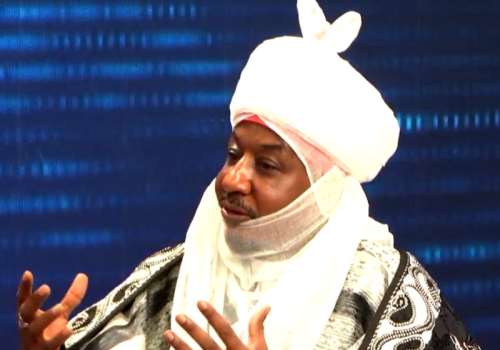

The 16th Emir of Kano, Muhammadu Sanusi II, has raised concerns over the federal government’s continued reliance on borrowing despite the removal of petrol subsidy, a policy that was widely expected to boost government revenue. Speaking during an interview on News Central TV, the former Central Bank of Nigeria governor faulted Nigeria’s practice of supporting foreign refineries while domestic refining capacity remained dormant, arguing that it represented a systemic failure.
Sanusi questioned the logic behind continuous borrowings when, according to him, “the government should have more fiscal space” after ending the costly fuel subsidy regime. “If you stop paying subsidies but continue borrowing more, it means you’ve filled one hole only to dig another. The real challenge now is the quality of government spending and the management of the revenues saved,” he said. His comments came amid controversy over President Bola Tinubu’s request for Senate approval of a $516.3 million loan for sections of the proposed Sokoto–Badagry Superhighway.
The traditional ruler acknowledged recent improvements in the oil sector, noting that Nigeria is beginning to shift from heavy reliance on imports to domestic refining and export. “Today, we have our own domestic refinery. We are no longer importing petroleum products; we are even exporting to Europe. That is positive for the economy,” he stated. However, he questioned the sequencing and timing of the reforms, particularly the removal of subsidy and liberalisation of the foreign exchange market, arguing that implementing such measures in a loose monetary environment contributed to the sharp depreciation of the naira.
From a fiscal policy perspective, Sanusi’s critique highlights a central tension in Nigeria’s economic management: the gap between revenue-enhancing reforms and expenditure discipline. Subsidy removal was expected to free up over N5 trillion annually, yet borrowing continues, raising questions about where the savings are going. Weak fiscal discipline risks undermining the gains expected from recent economic reforms, as higher debt service costs consume an increasing share of government revenue, leaving limited fiscal space for capital expenditure and social services.