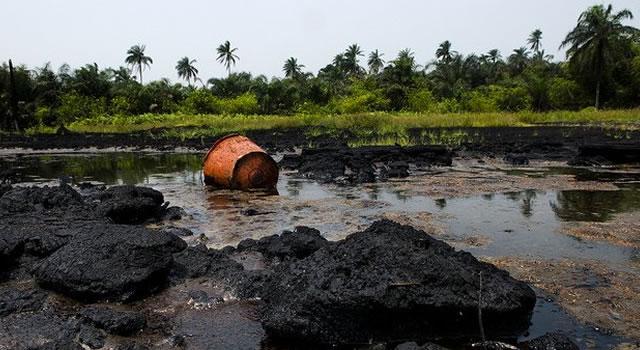

Celestine Akpobari, an environmental rights activist and former member of the Hydrocarbon Pollution Remediation Project (HYPREP) Governing Council, has stated that oil exploration cannot resume in Ogoni land until the ongoing cleanup exercise is substantially completed. In an interview, Akpobari expressed confidence in the work done under the current project coordinator, describing him as a human rights activist who was in the trenches campaigning for the implementation of the UNEP report on Ogoni.
Akpobari noted that no contractor will do any shabby job under his watch, and that if there are complaints, HYPREP will be compelled to call back the contractor or re-award the contract to ensure the place is properly cleaned for people to return to their fishing and farming businesses. Regarding the percentage of work done so far, he explained that the simple and medium risk sites have been addressed, while the complex sites are yet to be awarded. He indicated that some companies from Australia were in Ogoni to carry out characterisation to determine the level of pollution before those contracts are awarded, and that such contracts will involve major international cleanup companies rather than local contractors.
However, Akpobari raised concerns about transparency in the project’s finances. He noted that the Board of Trustees, not the governing council, keeps and releases the money, and that information on funds released should be readily available on the HYPREP website. He stated that he checked and the information was not available, suggesting that if it is not there, there is something wrong, as this is a public project. He expressed confidence in the utilisation of funds under the present project coordinator and former Ministers Amina Muhammed and Alhaji Jibril Ibrahim, but could not vouch for other administrations.
From an economic and environmental perspective, the Ogoni cleanup is a prerequisite for restoring livelihoods in a region where oil pollution has devastated fishing and farming for decades. Without a credible cleanup, any resumption of exploration would risk further environmental degradation and renewed conflict with host communities. The lack of financial transparency, however, undermines public trust and could delay the completion of complex remediation work, keeping Ogoni off limits for oil production indefinitely.