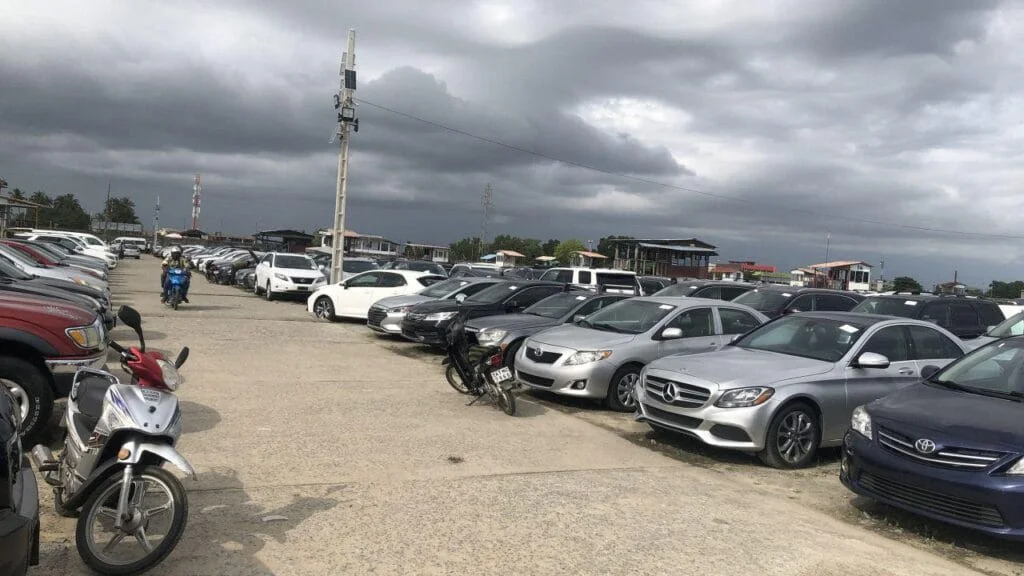

For millions of Nigerians, owning a car has long been more than a convenience—it has been a necessity in a country where public transportation remains inadequate and urban sprawl continues unabated. Yet over the past three years, the dream of personal mobility has steadily drifted beyond reach for a growing segment of the population. Now, with the Federal Government’s introduction of the mandatory pre-shipment vehicle certification under the SON–NADDC Vehicle Conformity Assessment Programme (VehCAP), stakeholders are bracing for another wave of price increases that could fundamentally alter the automotive landscape.
The trajectory of vehicle prices in Nigeria tells a story of compounding pressures. Currency depreciation, inflation, and successive increases in import duties have transformed the used car market into a terrain of painful trade-offs. Aduragbemi Omiyale, reporting for Business Post Nigeria, captured the sentiment succinctly: “Prices in 2026 are stretching everyone. A used Honda Civic that was ₦4 million is now ₦8 million. It’s no longer about what you want, but what you can survive with.” This doubling of prices within a relatively short period reflects not only exchange rate movements but also the cumulative effect of duties, levies, and port charges that have steadily eroded purchasing power.
The numbers paint a stark picture. A Toyota Camry “Big Daddy” (2003–2005), once the quintessential middle-class sedan, now commands between ₦7 million and ₦8 million. A Toyota Corolla from the same vintage ranges from ₦8 million to ₦9.5 million. For those seeking to upgrade from public transportation, the entry point is sobering. One anonymous buyer, interviewed by Nairametrics, expressed the despair many feel: “This is my only chance to move from Danfo to a private car, but ₦8.5 million for a 2007 Camry is just heartbreaking. The math isn’t mathing.”
The mathematics of vehicle ownership has indeed become punishingly complex. Femi Fabunmi, writing in P.M. News, broke down the cost structure that now confronts prospective buyers: “A vehicle of ₦10 million now attracts over ₦4 million in charges alone. These costs inevitably get transferred to the final buyer, making cars impossible for many.” This translates to effective duties and levies approaching 45 per cent of the vehicle’s value before any port handling fees, shipping costs, or dealer margins are added.
Against this already challenging backdrop, the VehCAP policy, launched on March 31, 2026, introduces a new layer of compliance. The programme shifts Nigeria from a post-arrival inspection regime to a strict “verify before entry” model, requiring all new and used vehicles to obtain pre-shipment certification in their country of export. Minister of State for Industry, Trade and Investment, Senator John Enoh, was unequivocal about the government’s resolve: “This is not just another regulatory intervention. It is a necessary shift in how vehicles enter, operate, and ultimately impact our country.” He confirmed that the policy takes immediate effect, with non-compliant imports facing refusal of clearance, seizure, or sanctions.
The government’s rationale centers on safety and industrial development. Joseph Osanipin, Director-General of the National Automotive Design and Development Council, explained that VehCAP addresses a long-standing vulnerability: “A significant proportion of vehicles, particularly used ones, enter without adequate verification.” Enoh himself acknowledged the dangers of the status quo, noting that the current system allows vehicles of questionable structural integrity and emissions performance to enter Nigerian roads. The NADDC, in its official policy statement, framed the reforms as a strategic instrument “to ensure they meet safety and quality standards.”
Yet for dealers and prospective buyers already stretched thin, the timing could not be more difficult. An auto dealer at Tin Can Port, speaking to maritime reporters about the impact of recent valuation rates, painted a picture of a sector under strain: “Before, I could stock five cars with my capital. Now, the same money barely clears two. We are seeing a massive reduction in demand.” The new pre-shipment certification, with its associated costs and logistical complexities, threatens to further compress already thin margins and reduce the volume of vehicles entering the market.
Economic analyst Olufemi Adewale articulated the central tension that many see at the heart of the policy. “Nigeria imports hundreds of thousands of used vehicles because locally assembled cars remain far beyond the reach of most households. Higher duties mean higher prices.” The government’s industrialisation agenda, which aims to stimulate local assembly plants and create jobs, faces the reality that domestic production capacity remains insufficient to meet mass-market demand. Shola Akinyele, an analyst writing in TELL Magazine, supported the long-term vision, stating that “these measures will stimulate job creation and support economic growth.” But for households seeking affordable transportation, the immediate impact is unequivocally higher costs.
The shift toward local brands is already discernible. Focus2Move Analysis, in a market report published in late March, noted that “Innoson is now a leader because they offer rugged 4WDs like the IVM G6 at ₦12 million–₦33 million, which is the only way some can still afford a ‘new’ car.” Yet even these locally assembled vehicles remain out of reach for many Nigerians whose budgets fall in the ₦5 million to ₦10 million range—a segment increasingly squeezed out of the market.
For those who can still afford to purchase, the calculus of ownership has shifted. Rosalia Ozibo, writing for Nairametrics, captured the new reality of budgeting: “A budget of ₦10 million is now just the key to the next chapter, not the luxury it once was. You can still get a ‘Big Daddy’ Camry, but your options are shrinking.” Carsalesmannig Autos, in a budgeting guide, added another layer of complexity: “Whether a buyer chooses a ₦3 million Kia or a ₦10 million Lexus, the real total cost now includes higher registration, insurance, and immediate service fees.” These ancillary expenses, once afterthoughts, now figure prominently in purchase decisions.
The editorial team at Nairametrics observed a fundamental shift in buyer behavior: “The challenge for Nigerians spending ₦10 million or less is more than just picking a model; it is about finding something that will actually last.” Durability has overtaken prestige as the primary consideration, with buyers increasingly prioritizing vehicles that can withstand Nigeria’s road conditions and deliver reliable service over extended periods.
DreamCar.ng offered practical guidance for navigating the new landscape: “If you want a car in 2026, you have to look at the ‘small engines’ (1.0L–1.6L). They are the only ones with a sustainable fuel-to-cost ratio.” This advice points to another dimension of ownership cost—fuel efficiency—that has become critical as petrol prices have climbed. Even promotional offers reflect the new calculus. CIG Motors Group’s March price-slash campaign positioned the GAC GS3 at ₦25 million as a value proposition, describing it as “luxury meeting practicality for professionals.”
BusinessDay, reflecting on the broader implications, struck a measured tone about the delicate balance the government must strike: “Whether the government can balance local industry protection with ensuring mobility remains accessible is a delicate question yet to be answered.” Joseph Osanipin acknowledged the difficulty of the transition, noting that “the success of these reforms depends heavily on public awareness. There will be pushback, but the framework is based on global best practices.”
For the millions of Nigerians who depend on personal vehicles for their livelihoods—whether as taxi operators, delivery drivers, or professionals commuting to work—the cumulative effect of rising vehicle costs, import barriers, and ancillary fees represents a fundamental challenge to economic participation. As the VehCAP framework takes effect, the tension between the government’s industrial ambitions and the immediate mobility needs of citizens will become increasingly acute. In the meantime, the used car market continues to adjust, with prices reflecting not only the cost of the vehicle itself but the complex web of policies and levies that now define automotive ownership in Nigeria.