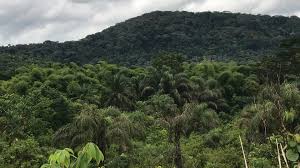

Nigeria holds over 10.6 million hectares of forests with vast economic potential that remains largely untapped, according to Prof. Zachariah Yaduma, Director-General of the Forestry Research Institute of Nigeria (FRIN). Speaking in a statement marking the International Day of Forests and World Wood Day, observed annually on March 21, Yaduma said the 2026 theme, “Forests and Economies,” underscores the critical role forests play in driving economic growth and sustainable development.
Yaduma emphasised that forests extend beyond income and job creation, sustaining agriculture, improving productivity, and protecting vital watersheds for communities nationwide. However, he lamented that current approaches capture only a fraction of the economic and environmental potential of Nigeria’s forest resources. The FRIN, he said, has advanced conservation, research, and community engagement, laying foundations for an inclusive and sustainable green economy.
The director-general, who also serves as Chair of the Man and Biosphere Committee in Nigeria, disclosed that FRIN is pursuing UNESCO Biosphere Reserve status for key forest reserves, including Shere Hills in Plateau State, and the Omo and Oban reserves in Ogun and Cross River states, respectively. The initiative, he explained, would promote harmony between biodiversity conservation and sustainable economic development, recognising that protected areas can simultaneously support ecological integrity and local livelihoods.
Yaduma highlighted the activation of Nigeria’s National Carbon Market framework as a significant development that positions the country as an emerging player in the global carbon economy. The framework creates direct financial incentives for reforestation and conservation efforts nationwide, enabling landowners, communities, and investors to generate carbon credits from verified forest conservation and restoration activities. He noted that FRIN’s scientific data, monitoring protocols, and verified planting stock are vital for attracting climate finance and maintaining global credibility in carbon markets.
From an economic perspective, the commercialisation of forest resources and ecosystem services represents a frontier of opportunity for Nigeria. Forests contribute to the economy through timber and non-timber products, tourism, watershed protection, and increasingly, carbon sequestration. With global carbon markets expanding and corporations seeking to offset emissions, Nigeria’s forest estate could become a significant source of foreign exchange if properly managed and certified. The National Carbon Market framework provides the regulatory infrastructure for such transactions, but success will depend on robust monitoring, transparent governance, and equitable benefit-sharing arrangements with forest-dependent communities.
Yaduma’s remarks also reflect a broader shift in thinking about natural resource management. “The era of extractive economies is waning, replaced by innovation, regeneration and shared prosperity driven by green growth,” he said, calling on policymakers, the private sector, and citizens to transform forests into engines of future economic growth. This perspective aligns with global trends that recognise forests not merely as timber reserves but as critical infrastructure for climate regulation, water security, and biodiversity conservation—all of which underpin long-term economic resilience.
The pursuit of UNESCO Biosphere Reserve status for Omo, Oban, and Shere Hills represents a strategic effort to align conservation with development. Biosphere reserves are designated under UNESCO’s Man and the Biosphere Programme to promote solutions that reconcile conservation with sustainable use. Achieving this designation would enhance the international profile of these reserves, potentially attracting research partnerships, conservation funding, and eco-tourism investment.
For forest-dependent communities, the economic potential of forests translates into livelihoods through sustainable harvesting, agroforestry, and participation in carbon markets. However, realising this potential requires investment in community capacity, secure tenure arrangements, and value-chain development that moves beyond raw timber exports to processing and manufacturing. FRIN’s research mandate includes developing improved planting stock and silvicultural practices that can increase productivity while maintaining ecological integrity.
The International Day of Forests provides a moment to assess progress and reinforce commitments. As Yaduma noted, the foundation for a sustainable green economy has been laid, but collective action across government, private sector, and civil society is required to unlock the full potential of Nigeria’s forest estate. For a country seeking to diversify its economy and build climate resilience, forests represent not only environmental assets but strategic economic resources.